Spider Bites – All You Need to Know!
The following information on spider bites and spider bite first aid is a useful quick-reference guide for pest managers and homeowners alike.

Although spiders help to keep insect numbers down, they are often considered pests for three reasons:
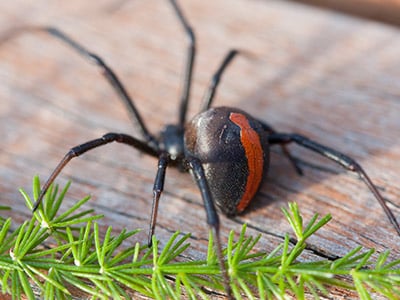
Perhaps the top two spiders of concern for homeowners are the redback and the white tail. Due to their painful bites most homeowners, especially those with children and pets, will take action if they see a either of these species.
The funnel-web is recognised as the most venomous spider in Australia. Although no-one has died from a funnel web bite since the creation of the anti-venom in 1981, their bite is still extremely painful and medical attention must be access immediately. Fortunately, funnel webs are not widespread in many residential areas.
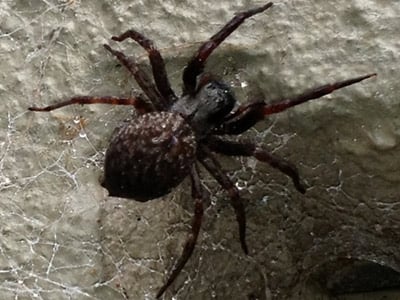
Other than the redback, the most common species around buildings is probably the black house spider. Although it can give a bit of a painful bite, it is considered more of a pest due to the dense webs it can build around doors and windows, and under eaves.
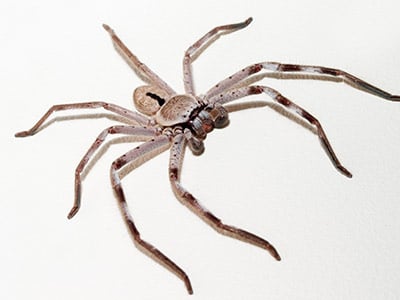
Perhaps the scariest spider, even for non-arachnophobes, is the huntsman. Due to its size and speed, and habit of ‘jumping’, it’s certainly a spider to get the pulse racing!
The type of spider bite first aid depends on the spider – funnel-web spiders (and mouse spiders) require a different first aid treatment to other spiders.
Funnel-web spider bites can be fatal and if you get bitten you need to get immediate medical treatment.
It can be difficult to tell the difference between a funnel-web and other large black spiders, such as mouse spiders or even black house spider. So if you have been bitten by any large black spider with a body length greater than 2 cm and you are unable to identify the species, it is recommended you should follow the first aid procedure for a funnel web bite.
For other spiders you should follow the standard spider bite first aid.
The good news is that there have been no fatalities from a funnel-web bite since the anti-venom was developed in 1981.
The general treatment for a spider bite (other than the funnel web and similar black spiders) is:
A number of other common spiders will give a painful bite: the redback, black house and white-tailed. The redback is considered the most toxic and can cause nausea, general pain and sweating and so is more likely to require medical treatment.
Sometimes victims can suffer a severe allergic reaction to a bite resulting in anaphylactic shock. Should the victim develop swelling away from the bite site and / or difficulty in breathing seek medical help immediately.
Although there have been reports of necrosis / gangrene resulting from a white tailed spider bite, these have not be supported scientifically. In cases where this has occurred, it is more likely from a post-bite infection (possibly from excessive scratching). The venom itself has no necrotic properties. Here the scientific paper studying white tail spider bites.
Medical disclaimer: While we make every effort to make sure the information on spider bite first aid on this website is accurate and informative, the information does not take the place of professional or medical advice.
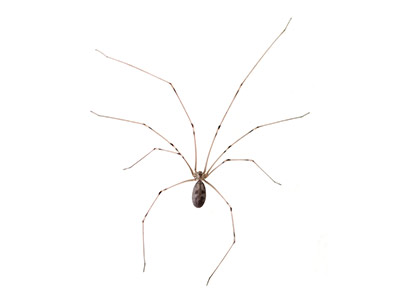
Telling the difference between a spider and other creepy crawlies is quite easy – spiders have 8 legs and 2 body segments. Insects, for example have 6 legs and 3 body segments.
However, apart from the obvious species, such as the redback and white-tail, identifying spiders for non-experts can be a bit tricky. Size and colour, web structure and location found are key descriptors which narrow down identification, along with the number and arrangement of their eyes.
Learn more about where common Australian spiders live and and hide.
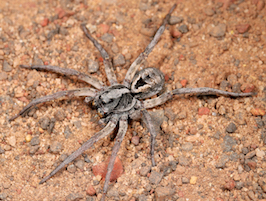
For help in working out what type of spider you may be looking at, apart from the images above, check out our guide for help with spider identification.
Most species have a similar life-cycle;
Life span of adult females is generally around three years, although in captivity they can live much longer.
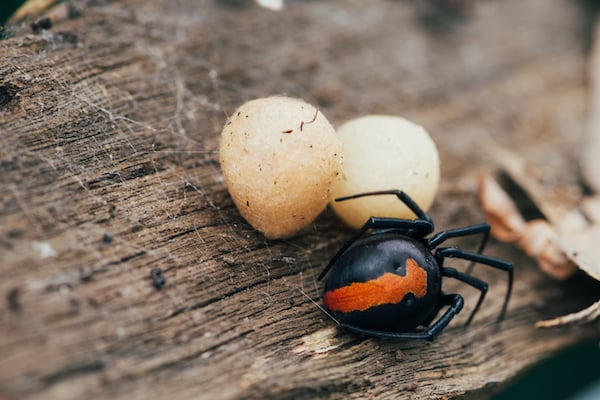
Female spiders spin silk egg sacs to protect their eggs against the environment and some (but not all) predators.
The placement of these egg sacs vary between species; some keep them in the web (black house), some hide them (orb weavers), some protect them (huntsman) and some even carry them until they hatch (wolf spiders).
Learn more about the spider egg sacs of the common Australian species.
Baby spiders are more accurately called spiderlings. After hatching from their egg they remain inside the egg sac until their first moult (they moult as they grow).
Once outside the egg sac, the spiderlings will remain close by for a while before they disperse. Some spiderlings disperse by ballooning – climbing to a high point and dropping a silk line to catch the wind and taking off. Spiderlings may be carried up to several kilometres by this technique.
Wolf spiders are known to care for their babies after hatching, with the spiderlings remaining with the mother, hitching a ride on her back for several months until their fat reserves have been used up and they need to start finding their own food.
Spider webs (cobwebs) are made out of a proteinaceous silk. It is produced from spinnerets at the end of the abdomen and it’s an amazing material – it has a tensile strength far greater than steel of the same weight, and with greater elasticity.
Webs come in various shapes and sizes. In addition to the traditional radial web (orb weavers), there are ‘funnel’ shaped webs (black house and funnel-webs), more irregular three dimensional ‘nets’ (redbacks) and sheet webs.
Although some species do not build webs, they can still produce silk, sometime to wrap prey once caught and females also use silk to build egg cases.
There is also the bolas group of spiders that spin a line of silk with a sticky blob of silk at the end, which they use to “lasso” moths as they fly by.
If you were ever wondering whether spiders can stick to their own web… they can! They have dense hairs and non-stick surface on the surface of their legs and avoid getting trapped by spinning the web very carefully. They actually produce two different types of silk – structural silk (which they walk on) and sticky silk (which is used to catch the prey).
More information on the spider webs of common Australian spiders.
For homeowners, killing a single spider, especially of a web-building species, is relatively straight forward – just spray the spider with a spider spray or crawling insect aerosol. But if you have a particular problem or want lasting protection, it’s probably best to call a professional pest manager with their experience and specialist products.
The type of treatment a professional pest manager will provide will depending on the species present.
Often web-building spiders will be included in a general pest treatment, as the pest managers will treat the perimeter of the building and other pest hotspots where web-building species tend to build their webs. However, they can do a specific treatment for redbacks and other web-building species if there is a specific problem or infestation. Due to the behaviour of web-building species and the effectiveness of the treatments, it is not uncommon for pest managers to offer a 6 month warranty / service-free period and sometimes longer.
For DIYers or even professionals, the use of a broom to brush down cobwebs is a very useful control tool.
Treating for running / hunting species is a bit more problematic. Such spiders tend to be nomadic and so it is always possible a stray individual will come wandering in from surrounding areas in search of shelter and food. They can walk across treated zones on the tips of their legs and as such will often pick up insufficient amounts of insecticide. However, a comprehensive general pest / perimeter treatment will eliminate other pests which are the main food source for hunting spiders. As a result your home will be far less attractive to these species and the chances of them coming in will drop off dramatically.
Sometimes the problem is not just an occasional spider, but an infestation! This would mean there must be ideal breeding conditions in or around the property. In such circumstances the pest manager will do an inspection to try and locate the hot spots. This may result in specific treatments in roof voids and wall voids, or in the case of funnel webs, treating an area on the property where spiders have been located.
For more information on professional treatments, check out our magazine articles:
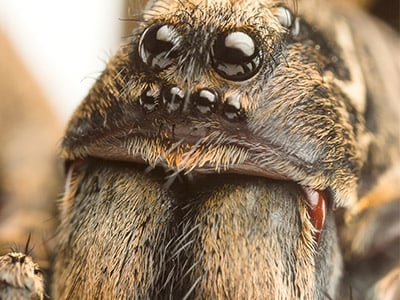
Most spider species have eight eyes. The arrangement of these eyes can be used to identify the particular spider species. Although spiders have a lot of eyes, for most species their vision is not very good.
However, some spider species have 6 eyes, and a few have 4 or just 2. Some cave spiders have no eyes at all.
Spiders have 8 legs – they are not insects, which have 6 legs.
What a spider bite looks like generally depends on the type of spider. Many spider bites from larger spiders will have the characteristic double entry wounds, where the fangs have punctured the skin. However, these are not always visible.
Often the area around the bite will turn red and swell. Typically for a redback spider bite, there will also be sweating around the bite site.
Professional pest control is very good at killing spiders and preventing them building their webs. The treatment leaves a thin residue of insecticide on the surface which kill spiders crawling on the surface, thus preventing them building their webs. It can remain effective for several months.
A good quality crawling insect aerosol is effective at killing spiders, although they won’t die instantly. Avoid using fly aerosols as they are typically water based (create a foam when sprayed heavily on surfaces), and it take a lot of product and a longer time for the spider to die.
Check out our library for a range of articles on pest control spiders.
Can’t find the spider you’re looking for here? More information on Australian spiders from the Australian museum.

The following information on spider bites and spider bite first aid is a useful quick-reference guide for pest managers and homeowners alike.

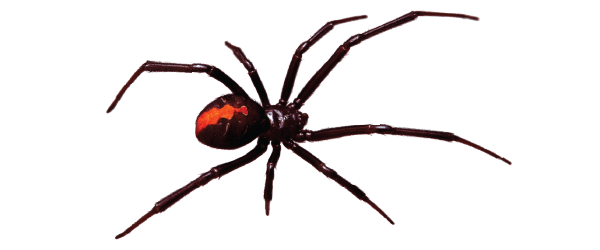
Being able to identify the webs of common spiders is essential for all pest managers.
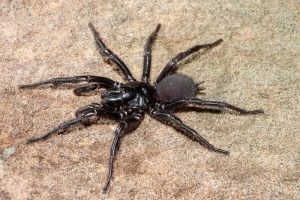
Funnel-web spiders often given homeowners cause for concern when found in the garden or indoors. Here we take a look at their key behaviours, identification and treatment.