
Biocontrol is an area of increasing focus for termite control. Below is a summary of the latest research in the subject of biocontrol and general termiticide products.
Latest termiticide and biocontrol research
Fungi as biocontrol agents
A variety of entomopathogenic fungi impact a wide range of insects, including fungi, particularly Metarhizium sp. and Beauveria sp. In laboratory trials they can be quite efficacious, with one recent laboratory study demonstrating 100% mortality within 24 hours for Beauveria sp. at 108 conidia/ml.1 However, these laboratory studies, whilst useful in demonstrating basic efficacy, are not comparable to the real-world situation. The main image above shows a Coptotermes formosanus soldier infected with Metarhizium anisopliae (photo credit: Rudolf Scheffran (CC BY 4.0).
A key challenge with fungal control is that termite colonies have a range of physiological and behavioural mechanisms in place to prevent entomopathogenic fungi getting into the colony. In addition, developing a suitable formulation that allows for easy application and protection from environmental factors has proved challenging. With some termite species being a significant issue in agricultural settings, a study has investigated the potential for inoculating plants with these entomopathogenic fungi – endophytic entomopathogenic fungi (EEPF).2
Working with Odontotermes obesus, a fungus-growing termite in southwest Asia and significant agricultural pest, researchers evaluated Metarhizium anisopliae and Beauveria bassiana. For O. obesus, M. anisopliae proved the most efficacious in direct spray laboratory studies, with mortality occurring in around 1.5 days. The researchers then evaluated a number of techniques to inoculate seedlings. Foliar application showed the highest colonisation, with M. anisopliae achieving up to 89% in P. cineraria (Khejri tree, a member of the pea family). Interestingly, the inoculation increased plant health – enhanced growth characteristics elevated photosynthetic pigments, increased secondary metabolites and improved antioxidant enzyme activities. The next stage of the study is to assess the health and termite resistance characteristics of inoculated plants under field conditions.
Trichoderma metabolites boost termiticide performance
Trichoderma fungi are often found in close association with termites and appear to have a role in protecting the termites from infection by entomopathogenic fungi. Previous research has shown that Trichoderma triggers a strong aggregation response in termites and that termites preferentially forage in soils containing Trichoderma, where they will also produce significantly larger tunnels than in soils without Trichoderma. Researchers have previously isolated four metabolites from extracts of Trichoderma fungi that also trigger the aggregation behaviour in isolation. The latest research has evaluated three of these metabolites for their potential to enhance the performance of termiticides.3
Using filter paper dosed with insecticides alone and in combination with the metabolites, the experiments demonstrated that the inclusion of a metabolite with the insecticide boosted performance. In trials with both imidacloprid and fipronil, the speed and level of mortality was significantly higher with the inclusion of one of the metabolites. The two metabolites that delivered the best performance were ethyl 2,4-dioxovalerate and diglycolic acid. For example, filter paper dosed with 10 ųg/g fipronil only delivered 64% mortality after seven days, with significantly reduced termite aggregation. When fipronil at the same dose was combined with high concentrations of the Trichoderma metabolites ethyl 2, 4-dioxovalerate and diglycolic acid, significantly higher mortality rates of 91% and 96% were observed after seven days.
The researchers believe that this combination has potential for use in termite control products by increasing the performance of foam, dust or soil treatments by increasing exposure time, which may be particularly beneficial at reduced active levels. They could also have potential benefits in termite baits. Further research is required.
Plant extracts as termiticides
The interest in bioinsecticides has never been higher, following increased regulatory and customer pressure to reduce synthetic insecticide use. An increasing number of screening trials are assessing a variety of plant extracts on a wide range of insects including termites. Most of these trials are laboratory based, with little consideration as to how products would be applied in the field. Typically, they assess efficacy by either topical application on the termite or by confining termites to treated surfaces, then assessing repellency in choice studies between treated and untreated surfaces.4,5
Whilst this is understandable as a first stage of a screening process, termites are quite easy to kill with a direct treatment of many chemicals, so it is not uncommon for the vast majority of these ‘promising’ bioinsecticides to never progress into development. Additionally, the commercial production of many natural insecticides is also somewhat problematic, in part due to the variation in chemical makeup between plants of the same species and variations from season to season.
However, a termiticide based on arnica extract has been undergoing field evaluation. The proprietary termiticide formulation containing Arnica Biosolution (a polyphenolic plant extract) has been developed by Groupe Berkem (France). Previous laboratory trials have demonstrated that Coptotermes gestroi do not tunnel through treated soil and exposure to the treated soil results in 100% mortality. The product is currently under field evaluation for both pre-construction and post-construction uses. Results from field trials in Asia were reported at the 16th Pacific Rim Termite Research Conference (2026).6,7

In areas of high termite pressure against multiple species, the researchers report the Arnica Biosolution provided a “complete soil barrier for five years, confirming it as a sustainable alternative to conventional chemical treatments.”
Computer screening of plant-derived termiticides
Rather than somewhat randomly carrying out laboratory tests on plant extracts of interest to assess their insecticide potential, the computer screening (in silico) of potential candidates provides a faster, more robust and uniform method to identify potential candidates for in vivo screening. A team of researchers recently carried out an in silico screening of a chemical that inhibits cytochrome P450 in Coptotermes formosanus, which produces enzymes critical for insecticide detoxification.8 The site for enzyme production is very well characterised, so it’s possible to identify chemicals with the required molecular structure that should fit the cytochrome 450 site to block enzyme production. Other important characteristics can be included in the screening parameters to eliminate candidates with other less desirable properties. These include the absorption, distribution, metabolism, excretion, and toxicity to the termite, as well as an ecological toxicity assessment and environmental fate analysis.
The study resulted in identifying 27 compounds that met the performance criteria. However, several would appear likely to have relatively rapid degradation and others would have higher toxicity to aquatic life. In the end, five chemicals were deemed to be very promising to move to in vivo evaluation. Further research will be required to assess these molecules in real-world trials, which in turn will validate (or otherwise) the predictive nature of the modelling.
Nanoparticles
Nanoparticles (NPs) continue to be an area of interest in insect control. Nanoparticles such as zinc oxide, titanium dioxide and silica are commonly used, and have been evaluated ‘naked’ and in conjunction with an additional biocidal agent (such as an insecticide or microbe), where the nanoparticle acts as a carrier. However, the nanoparticles themselves appear to be efficacious. Zinc oxide NPs have shown to have both toxic and anti-feeding properties on termites. Modification of the physical structure of nanoparticles, with a potential impact on performance, can be achieved through a variety of techniques.
One such technique is laser irradiation. Researchers have evaluated laser-irradiated zinc oxide NPs on the termite Macrotermes malaccensis.9 The results demonstrated that laser-irradiated ZnO NPs delivered 100% mortality within 36 hours, when termites were exposed to ZnO NP treated filter paper. Both increasing the dose of ZnO NP and increasing irradiation time increased the level of mortality. More research is required to see if this technique has the potential to create an active ingredient for use in termite management.
References
1 Dendu Noutera Pramayuditya Harnieyane, Peristiwati Peristiwati and A. Anna Aryani (2026). Virulence And Horizontal Transmission Potential Of Entomopathogenic Fungi Against Subterranean Termites (Macrotermes gilvus). Biolink (Jurnal Biologi Lingkungan Industri Kesehatan). 2026-02-08. Citations: 0. DOI: 10.31289/biolink.v12i2.15380.
2 Tanmaya Kumar Bhoi, Deepak Kumar Mahanta, Samreen Samreen et al. (2025). Effect of endophytic entomopathogenic fungi (EEPF) in biological control of Odontotermes obesus (Rambur 1842) and their synergistic impact on plant physiological responses. The Microbe. 2025-06-01. Citations: 2. DOI: 10.1016/j.microb.2025.100411.
3 Ayesha Siddika, Siqi Chen, Keer Zhu et al. (2025). Attraction-Mediated Synergy: Insecticide Toxicity Against Coptotermes formosanus Enhanced by Trichoderma Metabolites. Insects. 2025-10-31. Citations: 1. DOI: 10.3390/insects16111116.
4 Ehui Joachim Ano, Yao Martin Siapo, Yao Kan Séraphin Diby et al. (2025). Phytochemical screening and evaluation of the insecticidal effect of Ageratum conyzoides (Asteraceae) and Croton hirtus (Euphorbiaceae) leaf distillates on Macrotermes bellicosus (Rambur, Isoptera) workers. International Journal of Biological and Chemical Sciences. 2025-06-11. Citations: 1. DOI: 10.4314/ijbcs.v19i1.24.
5 Elizabeth Olajumoke Olabisi Oyewole, Taiye Remi Fasola, Vincent C. Umeh and Adedapo Adedayo Adeniran (2025). Potentials Of Constituents From Parkia Biglobosa (Jacq.) R.br. Ex G.don Seeds Aqueous And N-Hexane Fractions Against Macrotermes bellicosus Smearthman [Blattodea: Termitidae]. Nigerian Journal of Entomology. 2025-12-31. Citations: 0. DOI: 10.36108/nje/5202/14.0220.
6 Daouïa Messaoudi and Menandro N. Acda (2026). Field Performance of Arnica Extract-Based Termiticide from Berkem Biosolutions® -Polyphenolic Plant Extract against Philippine Subterranean Termites. 2026-01-01. Citations: 0. DOI: 10.13140/rg.2.2.28408.92166.
7 Daouïa Messaoudi et al (2026). Efficacy of Arnica Extract-Based Termiticide from Berkem Biosolutions in Subterranean Termite Control: A Comprehensive Laboratory and Five-Year Evaluations.
8 Deepak Kumar Mahanta, Tanmaya Kumar Bhoi and Sumit Jangra (2026). In Silico Screening of Plant-Derived Termiticidal Compounds Targeting Cytochrome P450 in Coptotermes spp. (Blattodea: Rhinotermitidae) for Sustainable Termite Management. Plants. 2026-02-12. Citations: 1. DOI: 10.3390/plants15040581.
9 Sylvester Jande Gemanam, Stephanie Avar-Tsue, Nursakinah Suardi et al. (2026). Modified Zinc Oxide Nanoparticles (ZnO NPs) for termites’ control. Applied Nanoscience. 2026-01-07. Citations: 0. DOI: 10.1007/s13204-025-03133-7.
New potential insecticide – isocycloseram
Syngenta has announced a new insecticide in registration: isocycloseram. Although its performance on German cockroaches was highlighted in the announcement, it is a broad-spectrum insecticide. In laboratory studies on both Reticulitermes flavipes and Coptotermes formosanus, worker termites tunnelled into treated soil, indicating the insecticide was nonrepellent, and 100% mortality was achieved between 3-5 days, even in the lowest concentration.1 The paper also reported that the insecticide had passed at least six years in the United States Forest Service field trials.
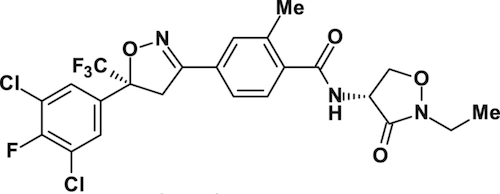
Further evaluation against termites can be expected, with the researchers describing isocycloseram as a non-repellent with delayed effects and activity at low rates, with the potential to be a very effective compound against social insects.
Nanoparticles for Termite Control
Research involving nanoparticles for the control of pests and pathogens in the agriculture sector has been underway for a number of years, but there are few studies on termites. Researchers evaluated nanoparticle solutions of zinc oxide, titanium dioxide and chitosan on the termite Odontotermes formosanus.2 All nanoparticles delivered significant mortality within 48 hours, with effects first being noticed at 24 hours. Titanium dioxide appears to be more toxic to termites than the other nanoparticles, delivering 100% mortality at the two highest levels tested. Interestingly, the nanoparticles themselves were created by mixing the zinc oxide, titanium dioxide or chitosan with a fungus, Scedosporium apiospermum. The researchers believe this research has enormous potential leading to biosynthesised insecticides for termite control with favourable toxicological and environmental safety profiles.
Nanotechnology can also be used to modify the performance of traditional insecticides. Fipronil is a well-known termiticide, but although classed as ‘slow acting’, it still could still benefit from further delayed action. Like many insecticides it also has high toxicity to aquatic life. Researchers have developed a fipronil silica nanoparticle coated with hydroxypropyl cellulose.3 The idea is that the cellulose coating means the fipronil is only activated once inside the termite gut, and the cellulase enzymes break down the cellulose (main picture, above). Trials on Reticulitermes flaviceps demonstrated the mortality of termites exposed to fipronil-loaded nanoparticles increased more slowly than ‘naked’ fipronil, which was expected due to the delayed release, and could possibly improve the transfer effect. Importantly, the cellulose coating also reduced its aquatic toxicity, reducing mortality and improving hatching rates in zebra fish by >6.5 times and 8 times respectively.
The same researchers have also developed metalorganic framework nanoparticles loaded with imidacloprid and capped with sodium lignosulfonate.4 This sodium lignosulfonate layer is degraded in the acidic and laccase-rich environment of the termite gut, releasing the imidacloprid. Compared to imidacloprid in a standard formulation, the nanoparticle exhibits a delayed onset of mortality and activity over a longer period, as the imidacloprid is gradually released.
RNAi Insecticides for Termite Control
A number of physiological processes are triggered by gene expression within termites that help detoxify insecticides. Similarly, genes also control termite behaviours that help with colony immunity, such as allogrooming. If the expression of these genes can be restricted or eliminated, it may provide new routes to control termites. This is called RNAi or RNA interference technology.
The first part of such studies is to identify the genes involved in the process, before utilising RNAi to prevent gene expression. Researchers evaluating the effect of RH-5849 (an IGR), found two genes in Odontotermes formosanus that were involved in the detoxification of RH-5849. Using RNAi, which delivered interference efficiency at 85.3% and 59.59% for the two genes, the lethality of RH-5849 was significantly increased.5
Allogrooming is a key element in helping maintain colony health by removing potential pathogens. Understanding the behavioural and physiological processes around allogrooming could therefore identify opportunities to influence this behaviour and open up new options for termite control, especially with reference to biopesticides.
One group working on Coptotermes formosanus has identified 60 micro RNAs (genes) that are expressed when the termites are exposed to the pathogenic fungus Metarhizium anisopliae.6 Some of the changes in gene expression can have positive effects (helping the termite fight infection) whereas some can have negative effects. It appears that the fungus is manipulating gene expression in the termite to help it infect the termite. If the expression of these genes can be manipulated to make the termites more susceptible to fungal pathogens, it could potentially be used as a control method.
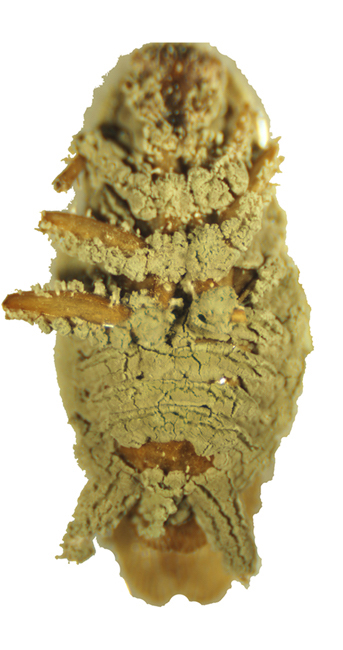
miR-571 is significantly upregulated in termites infected with M. anisopliae. This upregulation appears to reduce the normal termite pathogen avoidance and grooming behaviours – an example of a pathogen influencing the gene expression in the termite to its advantage. The researchers demonstrated that by exposing termites to a miR-572 agomir (either through injection or ingestion), miR-571 upregulation was further increased, resulting in significantly increased mortality in M. anisopliae-infested termites.
Working with Odontotermes formosanus, researchers have identified an odorant receptor co-receptor (Orco) that was expressed when the termites were exposed to SM1 (Serratia marcescens), a gram-negative bacteria with insecticidal properties. This gene expression resulted in increased allogrooming.7 Subsequent interference in the expression of the Orco resulted in reduced allogrooming and increased mortality in termites exposed to SM1. The researchers believe this finding could lead to the integration of RNA interference (RNAi) with biopesticides to advance research on termite RNA biopesticides.
References
1 Saran, R.K. et al. (2025) ‘Efficacy and utility of isocycloseram a novel isoxazoline insecticide against urban pests and public health disease vectors’, Pest Management Science, 81(2), pp. 978–989. https://doi.org/10.1002/ps.8497
2 Nasser, R., Ibrahim, E., Fouad, H., Ahmad, F., et al. (2024) ‘Termiticidal Effects and Morpho-Histological Alterations in the Subterranean Termite (Odontotermes formosanus) Induced by Biosynthesized Zinc Oxide, Titanium Dioxide, and Chitosan Nanoparticles’, Nanomaterials, 14(11). https://doi.org/10.3390/nano14110927
3 Wu, Z. et al. (2024) ‘Cellulase-responsive hydroxypropyl celluloseanchored hollow mesoporous silica carriers for pesticide delivery’, International Journal of Biological Macromolecules, 277(4) https://doi.org/10.1016/j.ijbiomac.2024.134612
4 Wu, Z. et al. (2025) ‘Sodium-lignosulfonate-conjugated metal-organic frameworks as dual-stimulus-responsive carriers for improved pesticide targeting’, International Journal of Biological Macromolecules, 305(2). https://doi.org/10.1016/j.ijbiomac.2025.141275
5 Xiong, Y., Xie, L. and Tang, F. (2025) ‘Silencing OdfoP-gp1 and OdfoP-gp3 with dsRNA increased the lethality of the non-steroidal ecdysone agonist RH-5849 against Odontotermes formosanus (Shiraki)’, Pesticide Biochemistry and Physiology, 208 https://doi.org/10.1016/j.pestbp.2024.106226
6 Chen, W. and Li, Z. (2025) ‘miR-571 manipulating termite immune response to fungus and showing potential for green management of Coptotermes formosanus (Blattodea: Isoptera)’, Pesticide Biochemistry and Physiology, 208. https://doi.org/10.1016/j.pestbp.2024.106274
7 Lu, X. et al. (2024) ‘The function of OforOrco in the allogrooming behavior of Odontotermes formosanus (Shiraki) induced by Serratia marcescens Bizio (SM1)’, Pesticide Biochemistry and Physiology, 204. https://doi.org/10.1016/j.pestbp.2024.106004