
Termite Professional Seminar 2026 – Presentation Summaries
The Termite Professional Seminar Series was a series of one-day events hosted by Professional Pest Manager magazine. The seminars were held in Melbourne, Sydney and Brisbane in June 2026, and were attended by nearly 300 pest managers. The seminars were broken into two key sessions: ‘Termite Biology and Foraging Behaviour’ presented by Dr Theo Evans (University of Western Australia) and ‘How Do Termite Products Actually Work?’ presented by Dr Johnalyn Gordon (University of Florida). Here we present some of the key talking points of the seminar.
Termite Biology and Foraging Behaviour
Termite Biology and Foraging Behaviour
Termite species distribution
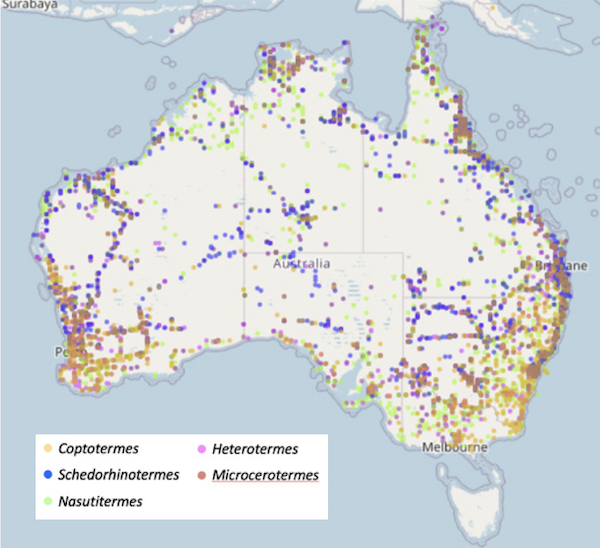
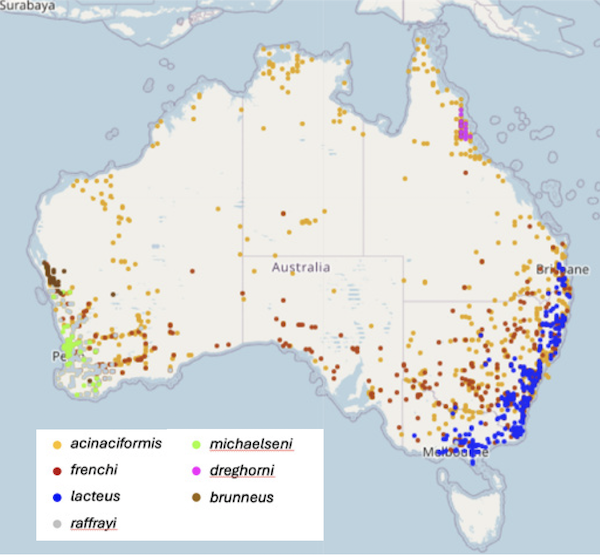
It’s important to appreciate that the main pest termite species will vary depending on your location in Australia (Figure 1). Representatives of the genera of Coptotermes, Nasutitermes and Heterotermes are found across mainland Australia, Schedorhinotermes is rarely found south of approx. 32oS latitude and Microcerotermes is rarely found south of around 35oS latitude (south of Bendigo). Individual species often have a more restricted distribution. Figure 2 shows the distribution of the various Coptotermes species. Note the most restricted species, Coptotermes dreghorni, is found only near Cairns in the wet tropics. Also, the most widespread species in Australia, Coptotermes acinaciformis, is under review, where the northern mound-building form and tree-trunk-nesting form may better be described as separate species.
Termite identification
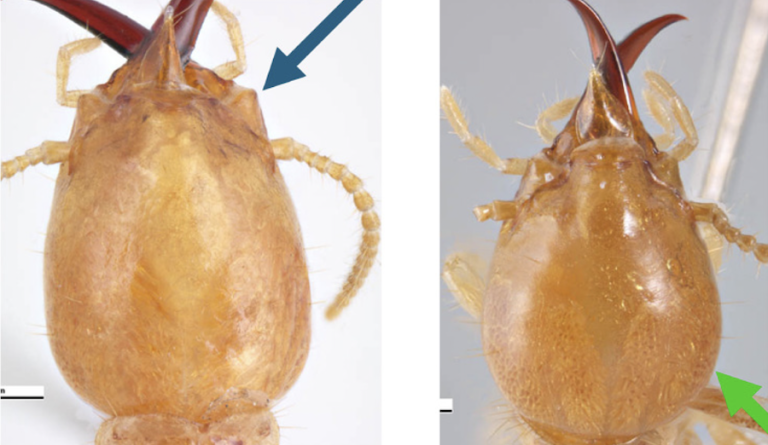
Termite soldiers are a key tool for pest managers to identify the various termite species. Differences between genera tend to be more obvious, such as Coptotermes and Schedorhinotermes, but differentiating between the various Coptotermes species is a bit more problematic. The different Coptotermes species can have different behaviours so it can be useful to differentiate between species in locations where more than one Coptotermes species could be present, such as Victoria, NSW and SE Queensland. C. acinaciformis have the biggest soldiers. Although soldier size increases along with warmer climates, the size difference between species remains constant i.e. C. acinaciformis soldiers (5.0-6.5 mm) will always be bigger than C. frenchi soldiers (4.0-5.0 mm) at the same location (around 25% bigger). In addition, C. acinaciformis soldiers have a more rectangular head than either C. frenchi or C. lacteus soldiers, both of which tend to be ‘pear-shaped’ with a bulbous rear (Figure 3).
Differences in behaviour can also help distinguish between species, with C. acinaciformis soldiers being a lot more aggressive than C. frenchi soldiers. C. acinaciformis soldiers run forward to engage, and readily exude ‘latex’ glue, whereas C. frenchi soldiers tend to be more wary and sometimes even retreat. Interestingly, Heterotermes workers, which are also quite timid, are the only termite known to run backwards – when disturbed, soldiers will typically run backwards waving and biting their jaws.
Although a key diagnostic for C. lacteus is that they build obvious mounds, it should be pointed out that the mounds only become visible in mature colonies (around ten years old). Mounds of any species can vary in size due to other factors. For example, for Nasutitermes exitiosus, the further you move away from the coast, the less visible the mounds become, until in the drier, inland locations, no mound may be visible.
Termite colony comparisons
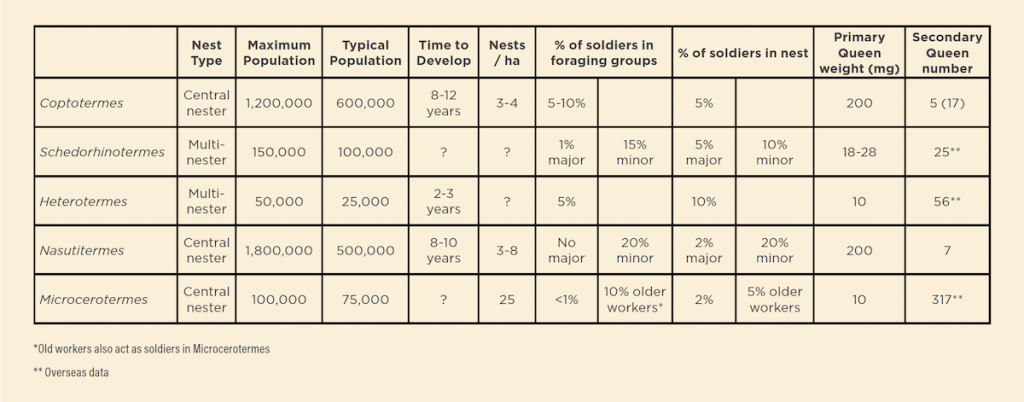
Understanding the colony size, reproductive capacity and demographics of the various species can help with identification but it also helps to understand the level of termite pressure that may exist around a property. Table 1 provides a summary of some key colony characteristics of the main genera of pest termites. Coptotermes and Nasutitermes are central-nesting species, with the one nest potentially containing over 1 million individuals. Schedorhinotermes, Microcerotermes and Heterotermes are multi-nesting species, with any one nest containing tens to hundreds of thousands of individuals.
All these species can live in the same location, so the nest density per hectare in the table for the individual species can be added together to get a feel for the total termite nest density possible. Assuming a total of 40 nests per hectare, this translates to 3.2 nests per 800m2 block!
The percentage of soldiers found at a feeding site may help determine how close the feeding site is to the nest. Typically, the closer you are to the nest, the more soldiers will be observed. This is particularly noticeable for Schedorhinotermes, where major workers are quite rare amongst foraging groups, but very noticeable nearer the nest. Similarly, for Nasutitermes, major soldiers are only seen close to the nest.
Termite professionals are always keen to try and find the queen(s) when a nest is located. It is interesting to note there are some quite significant differences in the queen size and number of secondary queens between the various species. The queens in the central nesting species (Coptotermes and Nasutitermes) are some 20 times bigger than the queens of the multi-nesting species, which is reflective of their egg-laying capacity. However, multi-nesting species tend to have significantly more secondary queens. In particular, Microcerotermes can produce hundreds of secondary queens (in Asian species).
Termite foraging distance
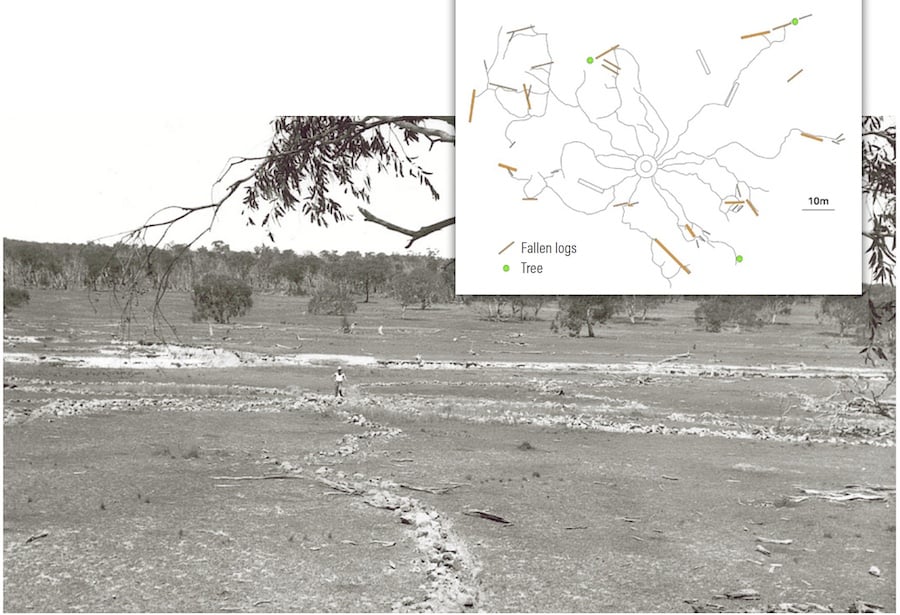
Understanding the potential foraging distance of the various species can help determine likely nest positions and assess the potential threat to a property. For the main destructive termite genera – Coptotermes, Schedorhinotermes and Nasutitermes, average nest-to -foraging-site distances would be around 30 m. For Heterotermes and Microcerotermes it is shorter, typically less than 10 m. So, if these species are attacking a building it can be assumed that the nest is relatively close by.
Obviously, knowing the exact distances the various species travel is difficult to measure. The often-quoted maximum foraging distance for Coptotermes of 80-100 m was determined by CSIRO several decades ago, when they actually excavated several nests and all the foraging tunnels to measure and map the foraging area. For Coptotermes lacteus (Figure 4), they uncovered 12-20 major tunnels during the excavation. These tunnels were evenly spaced, some 40-50 mm wide, with thick walls, always leading to major food sources. Most of these major tunnels were 50 m long, with the longest being 80 m.
Termite foraging patterns
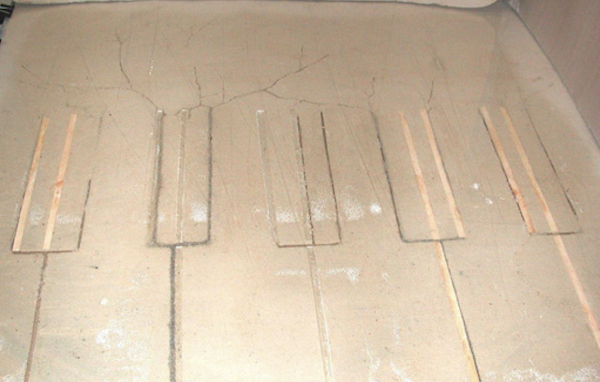
Understanding foraging patterns and how termites locate food can be useful in determining likely termite entry points to buildings. Termite foraging tends to be random in the absence of any varying stimuli – which is the case in uniform sand substrates in laboratory trials. When there is variation in the soil, termites show preferences. When digging through soil they prefer smaller particle sizes and clay/loam soils. Interestingly, when foraging in a varied soil environment (fine vs coarse sand), they will typically forage along the edges between the two soil types.
Soils are not uniform and around houses will often include various solid objects such as tree roots and utility pipes. Laboratory trials taking a closer look at foraging behaviour assessed the impact of these solid objects on foraging, with and without a gap alongside the object. (Figure 5). When thin wood or perspex pieces were embedded in sand with no gap alongside, termites preferentially chose a foraging route where a gap was already available, and particularly a route where there was a gap alongside wood. This is sensible in terms of foraging efficiency, as tunnelling through soil requires a significant energy input. It also explains why tree roots and utility pipes (under which gaps appear due to soil subsidence), become preferred entry points into buildings.
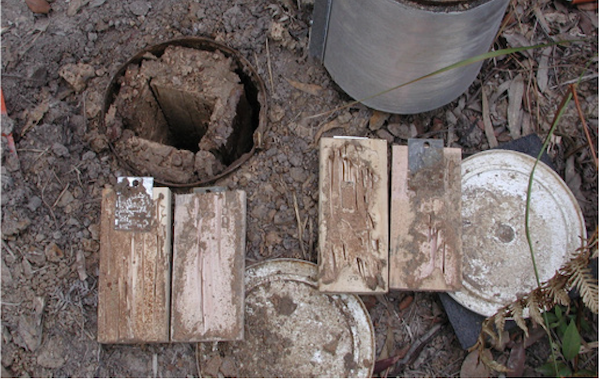
Soil temperature and moisture are also critical factors that impact termite foraging patterns. Field trials placing wood sources of different sizes under various materials have highlighted this. Wood samples were placed under four different materials of different sizes. Three materials were placed directly on the ground (a timber sheet, sheet of insulation material, metal sheet) and a fourth scenario included a metal sheet raised 4 cm above the ground (to allow for airflow). As well as the physical and chemical differences in these materials, the setups were intended to generate different soil moisture/temperature conditions. The number of ‘hits’ on the wood was measured.
In a temperate climate (Canberra), Coptotermes demonstrated a preference for wood under insulation or timber sheets – these soils had a lower temperature with a higher moisture content. In tropical Darwin, the key issue was soil moisture – Coptotermes readily foraged under all sheeting materials, except the raise metal sheeting (where airflow allowed the soil to dry out). Interestingly, Coptotermes had a preference for larger sheet sources and non-Coptotermes species showed a preference for medium and small wood sources. This largely aligns with the expected foraging patterns of the different species due to their dominance in the termite ecosystem. Coptotermes are the dominant termite species and target large food sources. They will outcompete smaller species, who are usually displaced from large food sources by Coptotermes. As a result, the subordinate species tend to exploit smaller, more transient food sources.
Wood consumption
Recent work has allowed Dr Evans to create a mathematical model to estimate the rate of wood consumption by termites anywhere in the country. The original data came from field trials set up in three locations: Darwin, Brisbane and Canberra, where the wood consumption rate of two different wood types was measured over two years (Figure 6). There was little variation in the rate of consumption through the year in Darwin, some variation in Brisbane, but a noticeable difference in Canberra – consumption was high in the warmer months (higher than Darwin) but there was virtually nothing during the cooler months.
The effect of temperature is explained by physiology. Insects are exothermic so their metabolism is impacted by temperature – the warmer the temperature, the faster their metabolism. This phenomenon is described by degree-days (growth related to accumulated temperature over time). For example, ten days at 15oC is approximately equivalent to 5 days at 30oC. Using the field trial data, wood consumption was shown to be strongly correlated with degree days, with rainfall having a small effect. This allowed a model to be created that utilises the published meteorological data to predict wood consumption data for any location in Australia.
The model has already been used in litigation, which has seen debate around how long termites may have been present in a piece of wood. While the model cannot determine precisely how long termites have been feeding, it can certainly determine the minimum amount of time it would have taken to cause the observed damage. This is particularly important when litigation is focused on whether termite damage was likely present or not at the time of a termite inspection.
It is also important to understand that the amount of time it takes to consume a given piece of wood depends on the number of feeding sites being utilised by a colony – the more spread out the foraging effort, the more feeding sites, the longer it takes to consume any one piece of wood. To give an example familiar to pest managers, a pine stud (2600 x 90 x 35 mm) in Brisbane could be consumed in as little as one month, if that was the sole food source for a colony.
How Do Termite Products Work?
Termite Products and Colony Elimination
The first stage of any best practice termite treatment involves the elimination of active termites from the building. Location and elimination of the nest is also ideal, but it is the elimination of active termites from the building that is essential. A range of product formats are registered for eliminating termites from the building, namely dusts, foams and baits. It is important to understand how these products work as part of the overall treatment program so the correct decisions and observations are made, and customer expectations are managed.
All three product formats are capable of eliminating active termites from a building, but only baits have proven colony elimination abilities. When considering the performance of products, proof of claim is generally provided on the label (supporting data has been provided to regulatory authorities) or through research that has been published in peer-reviewed journals. Peer-reviewed data on foams and dusts is quite limited. A couple of papers demonstrate the horizontal transfer in dusts and liquids in laboratory trials, but there is no specific data on foams.
Whilst dusts and foams can eliminate nests in direct nest applications, and horizontal transfer occurs, there are no papers demonstrating colony elimination when they are applied to feeding sites, in the same way as is achieved through baiting. The performance of dusts and foam, like liquids, is dose dependent. The time to mortality for an individual termite is dose dependent – the higher the dose the termite receives, the shorter the time it takes to die. The dose therefore impacts how far a termite can travel after being exposed to termiticide. A high dose allows for greater transfer, but the termite dies quicker; a low dose will allow the termite to live longer but deliver reduced transfer.
Although data on dusts and foams is limited, several studies on soil treatments in both the laboratory and in the field have suggested that the horizontal transfer of any treatment is limited to a distance of around the 5-metre mark. Coupled with the fact that termites have been shown to seal off foraging tunnels to areas treated with fipronil due to the mortality that occurs, the possibility that fipronil dusts and foams can deliver colony elimination in the field is probably limited to nests close to the treated area.
Baits can deliver very reliable colony elimination of heterotermitids (Coptotermes and Heterotermes), but the speed of action is influenced by temperature. Elimination can take less than three months in the warmer months but can take 3-6 months if the treatment includes the winter period. Baits are also an option for Schedorhinotermes, although pest managers need to take into account its multi-nest colony structure. For example, termites from non-treated nests can appear in the termite workings after elimination of the treated nest, which can cause confusion as to whether the product has eliminated the nest. For termitids such as Nasutitermes and Microcerotermes, baits can still work, but take considerably longer. For many customers this is too long and dusts or foams are often preferred for these species to eliminate activity in the structure.
Termite Entry Points
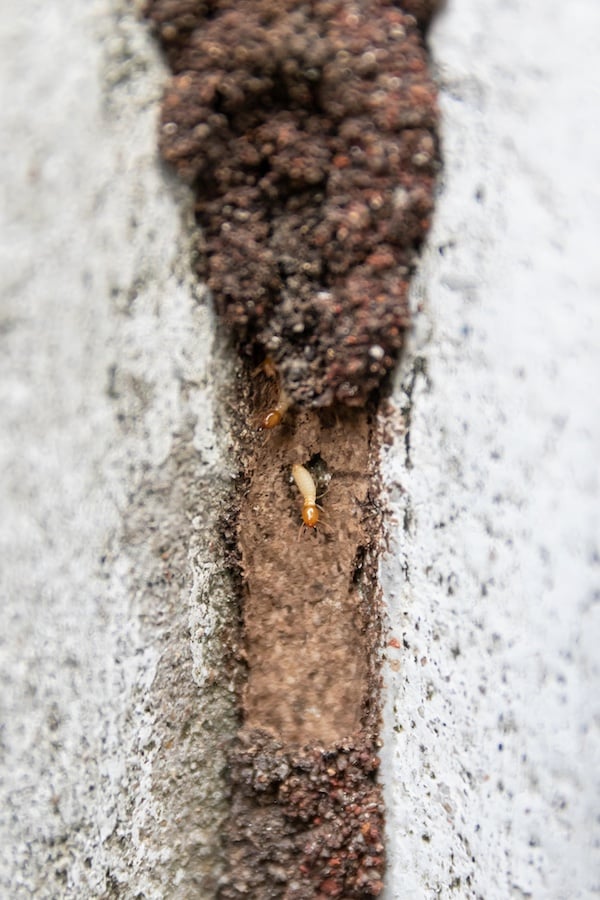
One of the key discussion points during the session was the importance of identifying and monitoring all termite entry points (Figure 1). Firstly, identifying all the entry points allows the nature of the termite attack to be fully understood, and any construction issues identified. This information is important in determining the appropriate treatment and identifying any remedial actions required.
Secondly, monitoring the activity at these entry points is the key tool in determining whether termites have been eliminated from the building. This is especially the case with dusts and foams that treat a specific area – termites may be eliminated from the treated area, but it is also important to ensure the termites are no longer coming into the building (and feeding elsewhere). But no matter what product is being used, all termite entry points should be identified and monitored as more than one termite colony could be attacking the house.
Thirdly, if a soil treatment is to be installed once the termites have been eliminated from the buildings, treating and breaking any leads at these entry points is an important part of the treatment.
Soil Treatments: Repellents v Non-repellents
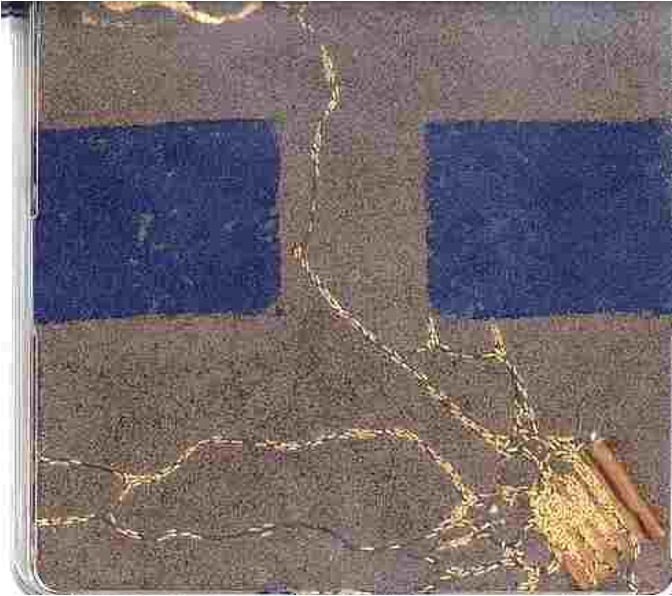
Soil treatments are a key tool for termite management. Bifenthrin is considered the leading ‘repellent’ treatment and fipronil is considered the leading ‘non-repellent’ treatment. Prior to the arrival of non-repellents, bifenthrin was the leading soil treatment termiticide. The issue with repellent chemistries is that termites can detect them in the soil and avoid them. This is great if you have a continuous barrier, but if you have a gap in the treatment, it is possible for the termites to find the gap and reach the house. Laboratory trials show this phenomenon quite clearly (Figure 2). However, it should be pointed out that bifenthrin products did provide high-performing treated zones for many years prior to the arrival of non-repellents (and still do). Treatment failures are not widespread, so if a complete treated zone is applied, they remain a good option for pest managers.
However, the arrival of non-repellents, such as fipronil, exploited this apparent weakness in pyrethroid chemistry, providing pest managers with a more ‘forgiving’ product. Even with the best efforts to install a continuous barrier, occasionally gaps in the treatment may occur (such as when injecting under hard surfaces). With non-repellent chemistries termites cannot detect these gaps so the chances of them tunnelling through the untreated zone, without subsequently tunnelling through a treated zone, is very small indeed.
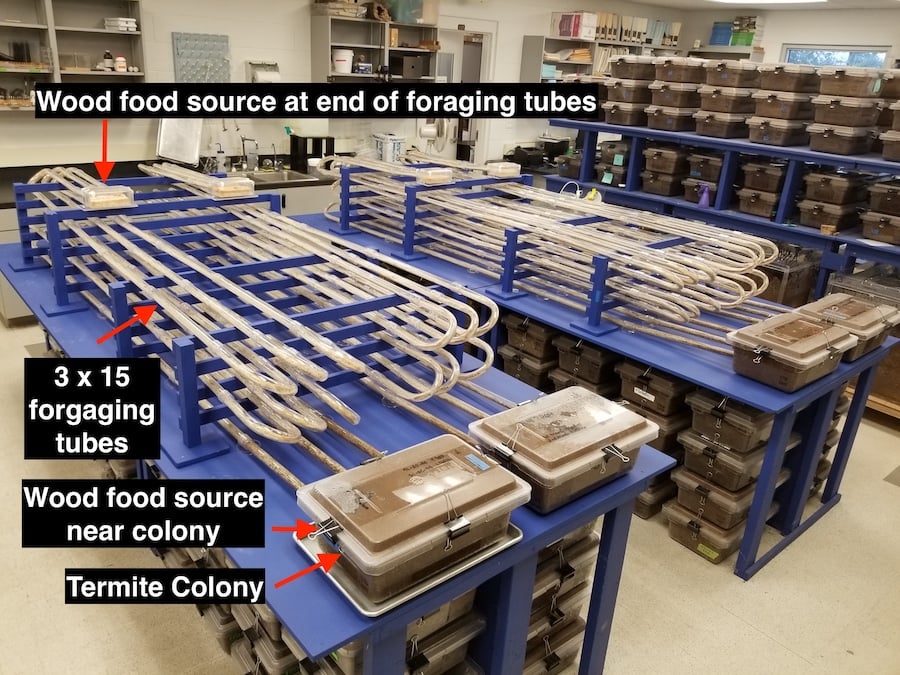
Recent studies have indicated that although fipronil may be considered non-repellent initially, secondary repellency can develop. Several laboratory trials have demonstrated that termites will avoid a fipronil-treated zone after initially tunnelling into the substrate by sealing off any tunnels containing dead termites.
Trials using whole colonies of Coptotermes formosanus, with treated soil placed at varying distances between the nest and the feeding site (Figure 3), demonstrated four key phenomena:
- Termite mortality was generally confined to within 3-5 m of the treatment;
- Termites sealed off the foraging tunnel connected to the treated soil and continued foraging in non-treated soil;
- Although numbers were initially reduced, the termite colonies survived, even when the treated soil was only 1.5 m from the nest;
- Termites remained active at the feeding site after treatment.
The act of sealing off the foraging tunnel leading to the treated soil is termed secondary repellency – the termites seal off and avoid an area of significant termite death.
Two conclusions can be drawn from these studies. Firstly, that installing a soil treatment before confirming the elimination of termites from the structure runs the risk of trapping termites within the structure – this applies to both repellent and ‘non-repellent’ termiticides. Secondly, soil treatments on their own are unlikely to deliver colony elimination. These observations emphasise the need to follow best practice: eliminate active termites before applying a soil treatment.
Termite Baits - How do they Work?
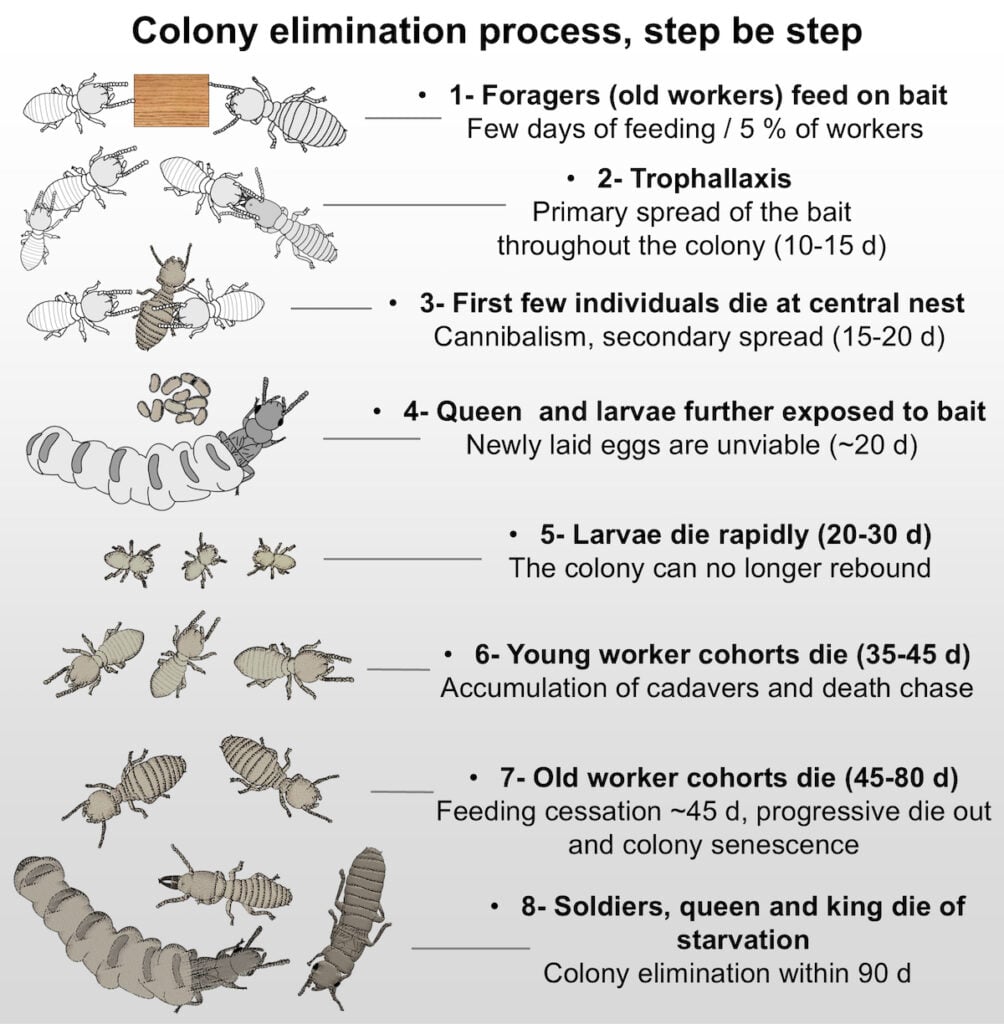
The impact of termite baits on a termite colony is now well described (Figure 4). Termite baits are based on chitin synthesis inhibitors (CSIs) – after consuming the bait, individual termites die when they try to moult. However, moulting is asynchronous (they don’t all moult at the same time), which is why it can take the colony several months to die. Nymphs and younger workers moult more frequently, and all workers return to the central nest to moult. In doing so, the nest accumulates a large number of dead bodies. Even though surviving workers cannibalise their dead nestmates, they cannot keep up with the rate of death, and the nest is soon overwhelmed. The reproductives, brood, and remaining workers in the central nest relocate to avoid the decaying corpses, but the workers returning to the nest to moult will seek them out at their new location. Eventually, all the larvae and workers are dead and the reproductives and soldiers die of starvation.
Termite colonies are incredibly sensitive to CSIs – laboratory trials with whole four-year-old colonies indicated that only one day of feeding was enough to result in colony elimination, a result of feeding on as little as 1.1 g of bait (5.5 mg active). For a colony of 1 million individuals, that translates to 18.6 g of bait (93 mg active). Although these figures will vary depending on the species and size of colony, these figures are comparable to data from field trials. In a separate trial it was estimated that 2.5-5% of the workers need to feed on the bait to deliver colony elimination in 100 days.
In terms of monitoring bait performance in the field, it is important to appreciate that taking bait from a bait station is not the same as eating bait; bait may be stored before eating, particularly with the Coptotermes here in Australia (much of the bait consumption work done was on non-mound-building Coptotermes spp.). In such circumstances it will take longer for elimination to occur. Even though the termites do not need to eat much bait to cause colony elimination, it is important to keep providing sufficient bait for the duration of the treatment, as monitoring termite health and soldier/worker ratios in the bait station is a key part of confirming colony control. That said, with baits being so effective at low doses, if termites disappear from a bait station after eating only a small amount, they may still have eaten enough for it to be terminal.
(For a detailed description please review the article ‘How Do Termite Baits Work?’ on professionalpestmanager.com)
Termite Bait Placement
Optimal placement of in-ground and above-ground bait stations were discussed. Placement of in-ground stations in moist soils significantly increases the hit rate. For stations placed around buildings, they should be placed outside the dripline of the building. Additional stations can be placed around the yard but always in locations with higher soil moisture.
One of the common issues regarding bait placement around building is the concern that termites can bypass the stations and get to the house. Laboratory trials with bait stations 3 m apart (as per label) demonstrated that termites found at least one bait station within 21 days. The researchers also observed that once the termites found a bait station there was intense additional tunnelling for short distances around the station. Such behaviour may suggest there is a benefit to installing additional bait stations around a bait station that is discovered.
In terms of placement of above-ground stations on areas of activity, there is always much debate on whether (given the choice) the bait stations should be placed on active feeding sites or active mud tubes to get the best chance of a ‘hit’. Although it is often communicated that placement at feeding sites is the best option (as they are already feeding there) rather than placement on a mud tube (which is blocking a highway), there is actually no published data to confirm if one location is better than the other. However, it is important to place stations at all the different locations of activity found within a building, as there may be more than one nest attacking a property. It is also important to keep the moisture level up within the bait station. A wet ‘wick’ – a robust, absorbant material soaked in water – to lead from the current area of activity into the bait station, was suggested as a tip to initiate bait discovery.
Area-wide Termite Elimination
A number of recent studies have looked at the use of baits for area-wide termite management, with some delivering encouraging results. This is really an extension of the use of baiting systems around individual properties and is an option for consideration at commercial sites, housing estates (under strata management), heritage sites, and in parks and gardens, where trees may require protection. Areas are always susceptible to re-invasion from surrounding areas, but with a baiting system in place, treated areas can remain largely clear of subterranean termites.











“We really appreciated the support from delegates, speakers, sponsors and exhibitors alike, without which, events like this simply can’t happen,” said Dr Phil Ridley, director at Professional Pest Manager.
“Professional Pest Manager will continue to provide high quality educational events for pest managers, after all, as our tagline says, we are Your Pest Control Knowledge Centre.”