A round-up of interesting termite discoveries in the less common areas of academic research.
Allergic reaction to termites
Cockroaches are a well-known source of allergens. Given the evolutionary connection between cockroaches and termites, the question arises as to whether termite allergies could also be an issue? A recent study evaluating researchers in a termite lab in Taiwan resulted in nine out of 16 subjects having an immediate skin reaction to skin prick tests using whole body extracts of Coptotermes formosanus or C. gestroi.1
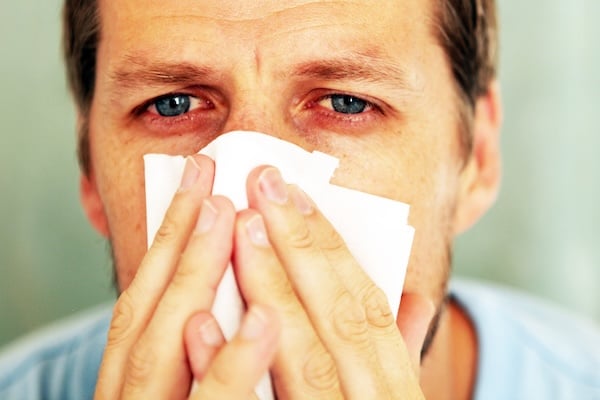
Of these nine subjects, eight also had rhinitis and one had dermatitis. The researchers point out that although this highlights the potential for allergic reaction to termites, the subjects in the study worked in a termite lab and therefore had a high exposure to termites over an extended period. Homeowner exposure in an infested home would likely be a lot lower and requires separate evaluation. However, pest managers with their regular and ongoing exposure to termites should consider the potential for allergic reactions.
Termite gut microbiota – new opportunities
The termite gut microbiota is integral to the success of termites, as they allow the digestion of cellulose and hemicellulose. This ability to digest cellulose is rare in the natural world and these properties are certainly of commercial interest. Now, these unique microbes are demonstrating potential for use in biofuel production, bioremediation and in the production of antibiotics for pest control.2, 3, 4 Their ability to degrade cellulose and lignin is of particular interest in the biofuel industry as it could allow efficient breakdown of waste plant biomass into ethanol. In terms of bioremediation, key opportunities are in areas of phenol degradation, azo dye remediation, and low density polyethylene.
The termite gut biome has a role in maintaining colony health, in particular through the presence of Streptomyces bacteria, which acts as a fungicide. There is potential here for its use in the fungal control of crops. This antibiotic potential is also the subject of research that aims to identify new chemicals to deal with the increasing threat of antibiotic resistance.
Nasutitermes slime in dental products
Nasutitermes saliva or “slime” is being evaluated as a material for use in dental and sealant, due to its antimicrobial and bioadhesive properties.5
Forensic scientists need to consider termite activity
Termites from a number of families (Mastotermes, Nasutitermes and Rhinotermitidae) have been recorded damaging bones. However, typically these are in archaeological and paleontological contexts. Termite damage in a forensic context (the investigation of recent human deaths) is rare. This is until a case was reported in 2025 of Nasutitermes damage to a desiccated human skeleton found inside a locked residence.6
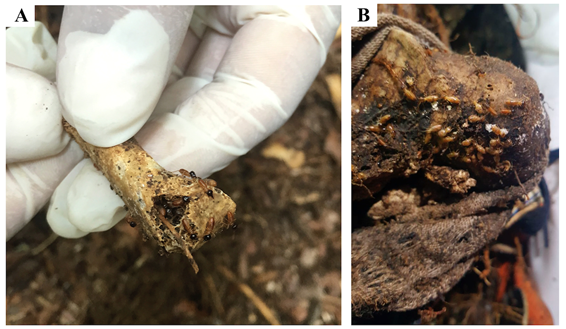
The pattern of termite damage mimics that of lytic disease and perimortem trauma, so in termite regions, it is recommended that in relevant cases the potential for termite damage should be considered during diagnosis of cause and manner of death.
References
1 Mey-Fann Lee, Chi-Shen Wu, Tzu-Mei Lin et al. (2026). Clinical manifestations and cross-reactions between cockroaches and termites and identification of termites’ major allergens. PLoS ONE. 2026-03-23. Citations: 0. DOI: 10.1371/journal.pone.0342319.
2 Ben Jesuorsemwen Enagbonma, Rorisang Mmushi and Olubukola Oluranti Babalola (2025). Biotechnological utilization: the potential role of the termite gut symbiotic microbiome. Symbiosis. 2025-04-01. Citations: 5. DOI: 10.1007/s13199-025-01053-2.
3 Mardani Abdul Halim, Carissa Wong, Kamarul Zaman Zarkasi et al. (2025). Exploring termite-microbe symbiosis: mechanisms, evolution and biotechnological potential. Asia-Pacific Journal of Molecular Biology and Biotechnology. 2025-04-10. Citations: 0. DOI: 10.35118/apjmbb.2025.033.2.04.
4 Taiwo Stephen Okanlawon, Adejoke Hamzat, M. A. Olarinre et al. (2025). The Termite Gut Microbiome as a Source of Novel Antibiotics: A Review. Journal of applied science and environmental management. 2025-11-17. Citations: 0. DOI: 10.4314/jasem.v29i11.30.
5 Élida Lúcia Ferreira Assunção, Kaio Henrique Soares and Simone Gomes Dias de Oliveira (2025). Natural Compounds Found in the Saliva of the Brazilian Termite Nasutitermes: Innovative and Sustainable Technologies for Dental Applications. Journal of Advances in Medicine and Medical Research. 2025-11-22. Citations: 0. DOI: 10.9734/jammr/2025/v37i125995.
6 Pierrick Negre, Jean-Bernard Huchet, Hélène Dietschy et al. (2026). When termites mimic disease: Vertebral osteolysis and indoor scene alteration in the French West Indies. Science & Justice. 2026-02-20. Citations: 0. DOI: 10.1016/j.scijus.2026.101411.