The Pest Pulse survey results report on how pest managers are responding to the changes in rodenticide regulations.
The recent changes to rodenticide regulations, which restrict the use of second-generation anticoagulants (SGARs), is one of the biggest regulatory shifts impacting pest control for years. The changes are significant, and there seems to be some confusion around the changes and what they mean for rodent management programs. Professional Pest Manager ran a Pest Pulse survey to get feedback from pest managers on the changes.
One of the main objectives of the changes is to restrict the use of SGARs. So the question we asked is whether professional pest managers had changed their SGAR use accordingly. Over 40% of respondents said that they had reduced the amount of SGAR baits they use “a lot”, with only 25% saying that it hadn’t really impacted on the amount of SGAR bait they use.
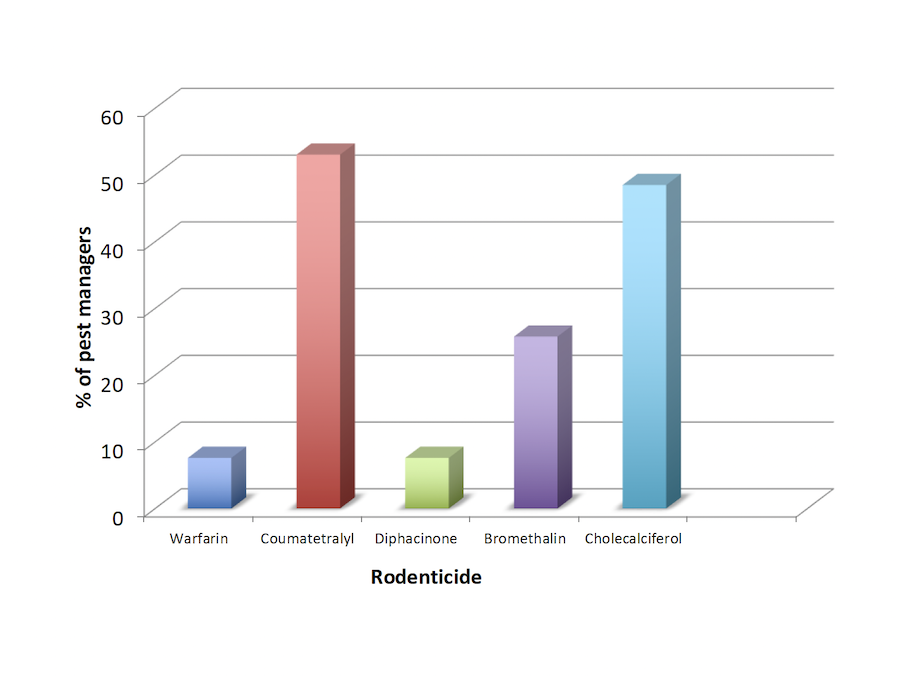
For those pest managers switching to non-SGARs, the most common choice was the first-generation anticoagulant coumatetralyl (53%), followed by cholecalciferol (48%) and bromethalin (26%). Figure 1 shows the alternatives pest managers are opting for.
Most respondents appear to be switching to alternative rodenticides rather than increase the use of traps, with just under 20% of respondents indicating they were using either “a few more” or a “lot more” traps.
The new regulations stipulate the use of lockable bait stations when using SGARs in the majority of situations. Just under 60% of pest managers said they weren’t using any more bait stations than before. Although the survey did not explore this further, it is probable that a large number of these pest managers would have been using bait stations as part of best practice rodent treatments anyway. However, 19% of pest managers said they were using a few more and 18% of pest managers said they were using a lot more bait stations under the new regulations.
Perhaps the biggest area of confusion with the new regulations is the requirement regarding treatment evaluation, which states:
“DO NOT use the product continuously for more than 35 days without an evaluation of the state of the infestation and of the efficacy of the treatment.”
The survey presented several different possible interpretations of this statement. The most commonly agreed interpretation was that when using SGARs you would need to visit the site every 35 days (or more frequently) and that once the infestation is eliminated, you must stop using SGARs. However, only 36% of respondents thought this was the meaning of the label instruction, with other pest managers having a range of different views (Table 1).
| Understanding of re-visit instruction | % pest managers with this understanding |
| Depends on the situation | 8% |
| Once, within 35 days | 5% |
| Every 35 days (or less) until infestation is eliminated | 23% |
| Every 35 days (or less) to allowed continued use of SGARs | 15% |
| Every 35 days (or less) and once no rodents are present, we must stop using SGARs | 36% |
| Inspect at 35 days and if control has not been achieved switch to a SGAR alternative | 5% |
| Other (please specify) | 8% |
Table 1: What does the new label instruction of SGARs mean regarding how often you need to re-visit the site?
The responses highlight the confusion around the wording and subsequent action that is required.
This new inspection requirement is certainly impacting how pest managers approach residential rodent treatments – 38% said they would be increasing the number of visits and 34% said they would use SGAR alternatives to avoid the extra inspection. Over 50% of respondents said they will be increasing the price of treatments, with a further 27% considering a price increase. However, several respondents commented about customers not being prepared to pay the extra costs for additional visits, with one respondent saying they would no longer carry out residential rodent work.
The new requirement appears to have less of an impact on commercial rodent control programs, with only 28% indicating they would need to increase the number of visits. Over 60% said they wouldn’t be increasing the number of visits, already do monthly visits, or would consider alternatives. However, the number of respondents implementing or considering a price increase for commercial programs was similar to the number implementing or considering price changes to residential services.
Despite the need for increased treatment evaluation, the option for considering the use of remote/digital monitoring was not something under consideration for the majority of pest managers (70%). Perhaps this may be due to the lack of clarity around the inspection requirement and whether/how remote monitoring can be utilised. However, 8% of respondents said that they were definitely considering it and just over 20% said they might consider the technology.
When asked to identify the most significant impact these changes were having on their rodent control business, most comments centred around increased costs and the efficacy concerns regarding the non-SGAR baits. Costs and pricing are the biggest issue. Whilst some customers were paying increased prices, other couldn’t or wouldn’t. Pest managers were reporting some loss of business and concern that the customers were then taking the DIY alternative. From an efficacy point of view, a number of pest managers had already reported an increase in rodent problems and callbacks when changing to SGAR alternatives. Whilst never a good thing, this was seen as a particular concern in food management accounts.
Product management was also highlighted as a concern. Some respondents reported they were currently experiencing trouble accessing SGAR alternatives (out of stock). Others also noted that replacing SGAR baits with non-SGAR baits was time consuming, wasting product, and raised concerns about the correct disposal of product. Some pest managers also noted the time impact of these changes. Not only due to the increased number of visits, but extra time explaining the changes to their customers and also the time required to rewrite commercial contracts.
The survey highlighted a significant level of anger in the respondents, with a number of comments questioning whether the industry could have done a better job in influencing the changes. Several respondents felt that the sale of SGAR rodenticides to consumers should have been the sole/primary focus of these regulatory changes.
Whilst accepting that some changes may be necessary to reduce the secondary poisoning risks, there were several comments around whether some of these changes would actually make any difference. There was also concern about the potential downside of increased rodent activity and its impact on businesses, health and agriculture.