A summary of the 2024 “Meet the Expert. Be the Expert” Online Seminar with Prof. Chow-Yang Lee.
On April 19, Professional Pest Manager hosted the inaugural “Be the Expert. Meet the Expert” online seminar. With 1014 registrants, covering 38 countries, it’s a solid indication that demand for this type of educational event is high.
“We were thrilled with the success of this first online seminar,” commented Dr Phil Ridley, director at Professional Pest Manager. “No doubt a major reason for the success was Professor Chow-Yang Lee, who delivered an excellent presentation and was very generous with his time in answering all the questions at the end of the presentation. With an overall rating of 9.4 out of 10, it was clear the attendees found great value in the seminar.”
Prof. Chow-Yang Lee, Professor of Urban Entomology at the University of California, Riverside, is one of the leading global pest control experts. His presentation entitled ‘Highlights in Urban Pest Management’ covered the latest research findings on biology and ecology of the key urban pests; challenges in pest management (particularly insecticide resistance); the latest research on control strategies and new active ingredients; and a look at the latest products on the US market. Here are some of the key moments from his presentation.

German cockroaches
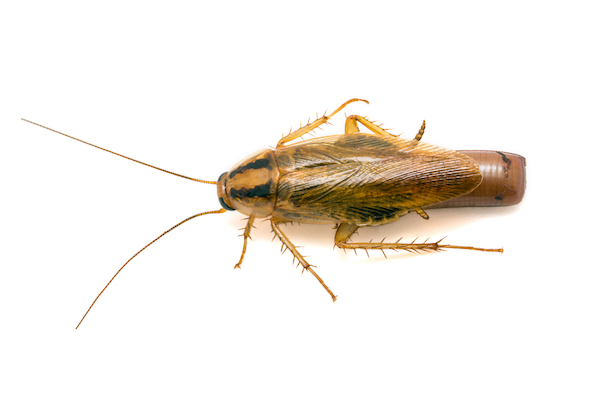
During the mating process, male German cockroaches present the female cockroach with a sweet secretion (a nuptial gift) to feed on as he mates with her. The secretion contains maltose, which is rapidly converted to glucose by her saliva. However, for glucose-averse German cockroaches, the glucose tastes bitter making it a rather unattractive nuptial gift, thus reducing the chances of a successful mating. So how have glucose-averse populations developed? It appears that the glucose-averse male cockroaches have evolved to produce maltotriose rather than maltose, which takes longer to convert into glucose when ingested by the female cockroach. The glucose-averse male also initiates mating faster than the normal male, thus taking advantage of this longer lead time before the female starts detecting the bitter glucose, leading to improved mating success.
In terms of control techniques, there is a general understanding that pyrethroids are repellent to German cockroaches. However, a laboratory study using field-collected cockroaches demonstrated that this isn’t the case. All pyrethroids tested failed to affect cockroach movement, with cockroaches spending as much time on treated surfaces as untreated surfaces. This was in contrast to the DEET, which significantly reduce the time spent on a surface. However, pyrethroids did impact the amount of time cockroaches spent in a harbourage, leaving the researchers to conclude that pyrethroids act as contact irritants rather than true spatial repellents.
Baits are the main product formats for German cockroach management. One of the key reasons baits are so effective is due to their secondary kill properties. After ingestion of the bait some insecticide is passed in the faeces and vomit of these cockroaches. After feeding on these body secretions, other cockroaches – that have not directly fed on the bait – are also affected, an effect known as the secondary kill. Researchers assessed a range of common bait insecticides to determine which are capable of tertiary and even quaternary kill. Not all baits delivered tertiary kill, and only indoxacarb and fipronil provided some level of quaternary kill.
A number of new active ingredients are being evaluated for their effectiveness on cockroaches. A new insecticide from Syngenta, isocycloseram, with a similar mode of action to broflanilide, is showing great promise. Cockroach bait containing isocycloseram performed well on a range of German cockroach populations including the highly resistant Ryan strain. It will be an excellent rotation product for populations resistant to fipronil, indoxacarb and neonicotinoids.
Termites
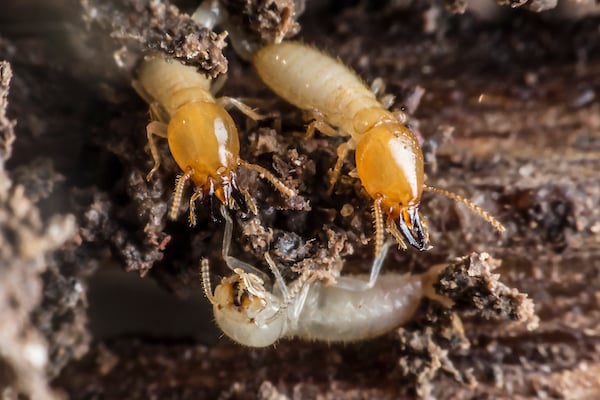
Pest managers always get excited when a potential new termiticide appears. ZM Crop Protection Corporation in Japan is evaluating dicloromezotiaz, a different insecticide group to current termiticides – pyridopyrimidine mesoionic (4E). It appears to have interesting physical properties, with low water solubility and good soil binding, which would indicate the potential for long duration residuality in the soil. When evaluated against eight other termiticides for primary and secondary transfer performance in the laboratory, it delivered 100% primary kill and over 90% secondary kill. In comparison, fipronil only provided 30% secondary kill.
Termite baits are one of the key termite management tools, particularly when targeting colony elimination. A new termite bait type, an injectable caulk bait, has been evaluated. Although the caulk bait was numerically quicker than the standard termite bait, the difference was not significant in the published trial. However, the new format may provide more flexibility in application, in terms of speed of application, site of application and number of application sites.
Pest managers will know termite baiting certainly requires skill and knowledge of the behaviour and biology of the different termite species. Although both above-ground and in-ground baits are proven to control Coptotermes species such as C. formosanus and C. acinaciformis, the latest research has demonstrated this is not the case for C. gestroi. Above-ground bait stations successfully intercepted and eliminated colonies of C. gestroi within 4-9 weeks, but none out of 83 in-ground stations were intercepted. The ineffectiveness of in-ground bait stations on C. gestroi is believed to be due to differences in their foraging behaviour and the lack of branching in their foraging tunnels.
From a termite biology point of view, the key finding over the last year has been the confirmation that hybrids of C. formosanus and C. gestroi have become established in the field. These two highly destructive termites co-exist in Taiwan, Hawaii and Florida. Previously it had been shown that they could hybridize and produce viable offspring in the laboratory, but this latest three-year field study in Taiwan confirmed the presence of hybrid alates. Although this indicates the presence of hybrid colonies in the field, hybrid colonies have yet to be located, so an assessment of the biology and destructive potential is yet to be undertaken.
Bed bugs

Bed bugs remain a key pest in the US and are of increasing importance in Europe and Asia. The crux of the bed bug problem is the high level of insecticide resistance in many populations around the world. Over the ten-year period from 2008 to 2018, the wild type of bed bug (no insecticide resistance) has disappeared from field populations in the US. Indeed, the type of resistant bed bug is also changing with the strongly resistant Haplotype C mutation dominating populations. It is clear that pyrethroids are no longer effective against bed bugs and should not be used. But with highly resistant strains dominating bed bug populations, even pyrethroid/neonicotinoid combination products, once considered the best option for bed bug control, are delivering poor results.
As a result, non-chemical control methods for bed bug management are becoming increasingly important, with dust products coming to the fore. One product that has been the subject of several studies is ChinChex dust, a combination of silicon dioxide and amorphous silica. It has been evaluated in a number of different formats and delivers high levels of control, even on resistant strains, with good secondary transfer effect too. A laboratory trial on furnishings also demonstrated the potential for dry steam treatments to deliver high levels of control.
Mosquitoes
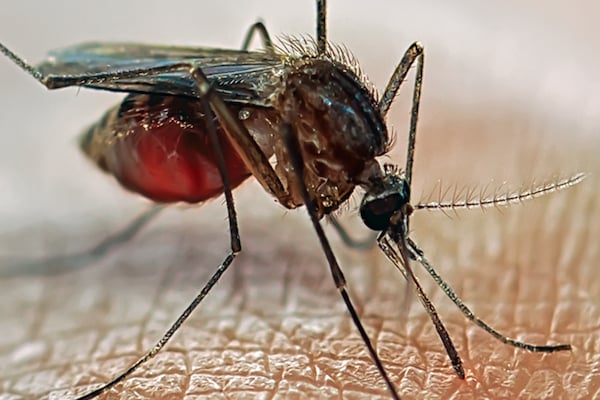
Mosquito control in many parts of the world is essential from a public health point of view. A recent study on Aedes aegypti has the potential to significantly impact insecticide applications for mosquito control. The researchers found that significantly more mosquitoes visited the bottom 20 cm of the internal walls of houses than the high areas of the wall. With mosquitoes known to prefer landing on darker surfaces, in laboratory trials when only this bottom 20 cm of the wall was covered with black treated paper, 85% mortality was achieved. This learning could lead to reduced insecticide use for improved performance, with householders capable of carrying out their own treatments, thus improving the performance of vector control programs.
The future
Prof. Lee sees the IoT coupled with machine learning and AI as the area of significant change in the pest control industry. In practical terms, this technology is already impacting pest monitoring; remote rodent monitoring systems have been on the market for several years and are improving rapidly. But monitoring is likely to increase in other areas, especially in the monitoring of stored product pests, bed bugs and mosquitoes. There is always the concern that the cost of such systems will be prohibitive, but on larger scales the labour cost in carrying out on-site management can be significant. These remote monitoring systems can be combined with automated identification (AI and deep learning) to improve the information from monitoring systems, further increasing efficiencies.
Prof. Lee also highlighted two other factors likely to have a big impact on the pest management industry. Firstly, climate change will definitely impact pest distribution, pest numbers, duration of pest season and pest behaviour – all of which is likely to increase the demand for pest control services. Secondly, sustainability will need to become a core element of industry thinking.
Watch the seminar online
Watch a full recording of the seminar and the valuable question and answer session at the end, to get full details on the discussion points above plus extra content.
For those who missed the event, the good news is that the seminar was recorded and can be viewed on the Professional Pest Manager website.
- New members will need to sign up to the Annual Seminar 2024 Online Access membership (free)
- Existing members will need to log in, before adding the Annual Seminar 2024 Online Access membership (free) to their account.