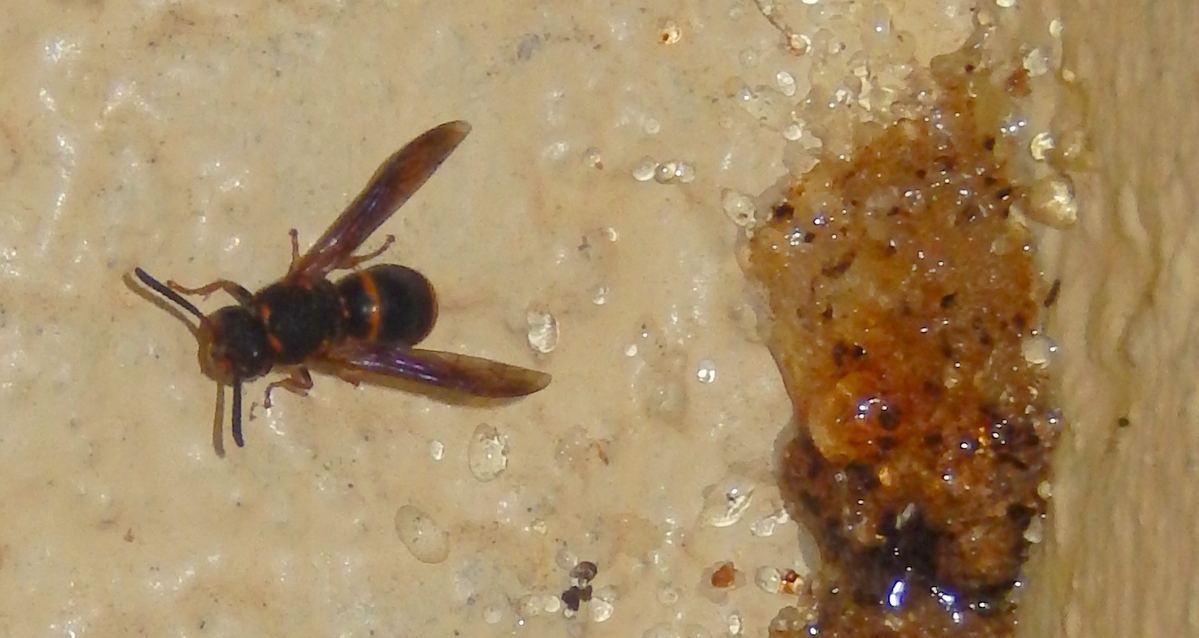
Resin Potter Wasp
Most potter wasps build their nests from mud, but resin potter wasps use the clear sap collected from plants to build their hard nests. Learn more…
There are a variety of wasp species that are found around residential properties and businesses in Australia. Many of these are natives species, such as the native paper wasps (which includes the Ropalidia paper wasps), and potter wasps (including the resin potter wasp) and mud dauber wasps.
However, the wasp of most concern in Australia is the invasive European wasp, which arrived in Australia in 1959 and is now in much of eastern coastal Australian and Tasmania.
There is also the strange wingless wasp, generally called the blue ant, There is it runs around on the ground.
Although not present (yet) in Australia, the Asian giant hornet has made its way to the US, where it has been in the news. It is a very large and very dangerous hornet! It’s of particular concern as it’s favourite food is honey bees, so if it makes it into Australia, it could decimate the honey bee population which would impact agricultural production.
To get rid of wasp nests, the treatment depends on the wasp species and location of nest. Typically treatments involved applying liquid or dust insecticide to the nest. Not surprisingly, when dealing with wasp nests it’s important to use the right safety gear.
Two of the more unique products used to deal with wasp nests are WaspJet long range aerosol and Vespex European Wasp Lure used as a wasp bait.
WaspJet is able to fire a high volume insecticide jet up to 5 metres, which allows pest manager to treat a nest from distance. Vespex European Wasp Lure, allows pest managers to create a highly effective wasp bait to eliminate nests whose location is unknown or cannot be reached.
More information on wasps.

Most potter wasps build their nests from mud, but resin potter wasps use the clear sap collected from plants to build their hard nests. Learn more…

How easily could the menacing Asian giant hornet take up residence here in Australia?

Wasps of the genus Vespula are challenging pests, but how did they become so well established in Australia, and what can be done to control their numbers?
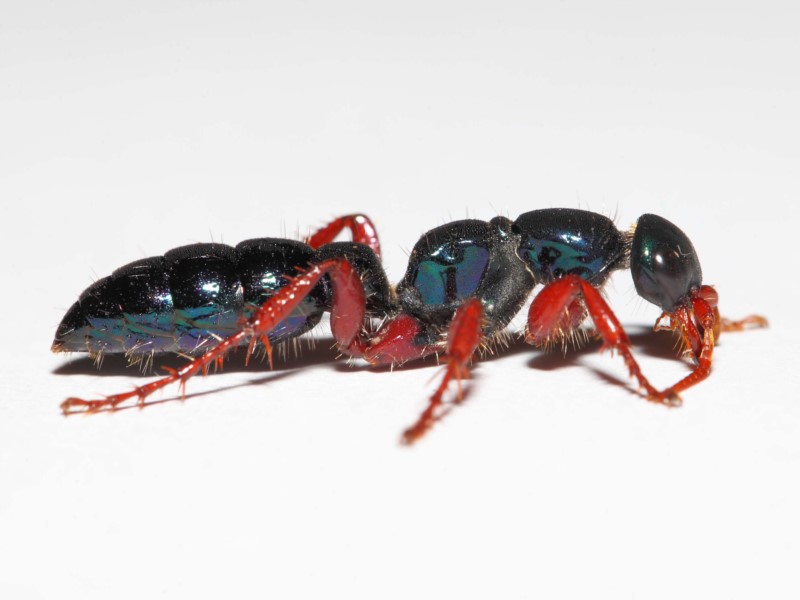
Image credit: Canberra nature map under licence These ground dwelling insects have a unique diet and distinctive appearance, and can be found in gardens across much of Australia. They can also deliver a very painful sting like their more notorious relatives. Could you identify a blue ‘ant’?
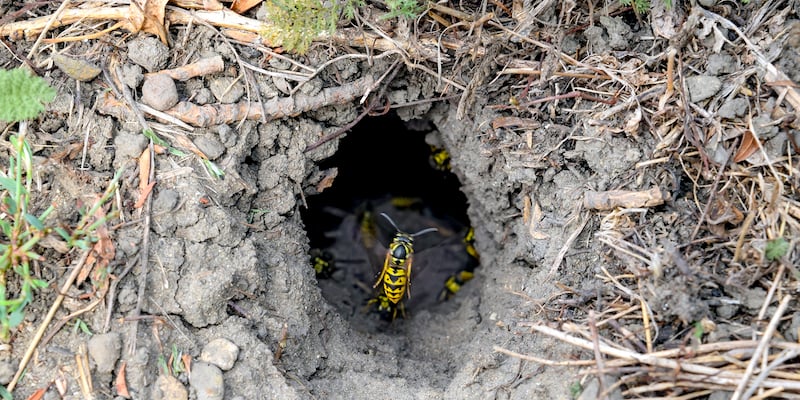
Charles McClintock from Sumitomo Chemical Australia examines the various methods of controlling wasps, including the dangerous European wasp.