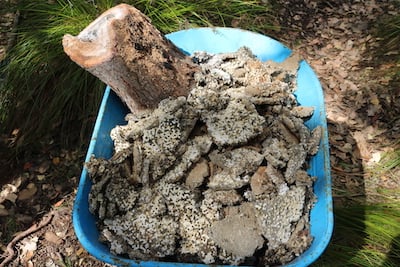
A huge European wasp nest has been discovered in WA.
The European wasp is an invasive pest that has become established in east coast states – NSW, ACT, TAS, VIC and around to SA. However, it is yet to become firmly established in Western Australia where it remains a reportable pest and active government monitoring and treatment programs are in place. However, European wasp nests are regularly reported in the southern areas of the state where the climate is more favourable. In fact, a huge 40-litre wasp nest was recently found in Albany.
Local residents reported a number of wasps in their backyards and workers from the Department of Primary Industry and Regional Development (DPIRD) used these reports and non-toxic lures to locate the nest. The nest was eventually found underground (95% of European wasp nests are found underground) in a nearby area of bush. The nest was destroyed with insecticide dust and on excavation it was found to be about the size of a bar fridge. With normal mature wasp nests being around the size of a basketball, this nest had likely continued to grow over a couple of seasons, with the opportunity to produce new queens each year.
Over the last three years, DPIRD has removed 33 nests from the Albany area, and so whilst it is not considered ‘established’ it still has a regular presence. It requires an ongoing effort to prevent their establishment. Wasps are unlikely to cross the Nullarbor Plain from the eastern states through natural spread, but they continually arrive on freight vehicles, as hibernating queens, in autumn and winter. The bigger the wasp season in the eastern states, the bigger the risk of new queens arriving in Western Australia.
Suspect European wasp sightings in Western Australia can be reported using DPIRD’s MyPestGuide Reporter app or via the department’s Pest and Disease Information Service on 9368 3080 or [email protected].
What exactly is a European wasp?
The European wasp is the common name for Vespula germanica, an invasive wasp species from Europe that is found in Australia. It is often confused with the English wasp, Vespula vulgaris, a different invasive species (that is not found in WA).
Main image credit: Department of Primary Industries and Regional Development