Having an effective monitoring system is the most efficient way of keeping pests out of stored product facilities.
Monitoring is one of the most important, yet overlooked, components of an integrated pest management (IPM) program, particularly in warehousing and food processing environments. Stored product pests such as moths and beetles can spread quickly, causing major commercial and reputational damage. Without monitoring, infestations are discovered too late, after pests have contaminated product or spread through a facility.
Pheromone and kairomone monitoring systems play an important role in preventing this. While visual inspections capture a single moment in time, lures act as an ‘always‑on’ 24/7 detection tool for pest managers. They detect and measure changes in pest pressure so technicians can act before infestations become too costly or difficult to manage.
Using data, monitoring improves decision‑making and reduces unnecessary treatments so technicians can implement controls where they are truly needed. This enables more selective chemical use and supports environmental stewardship. Now we know why monitoring matters, here is how to implement a pheromone monitoring program.
1. Identify the pest and understand its biology
A pest manager might implement a monitoring program for a number of reasons: when onboarding a new client; if a client changes their operational procedures; if a client introduces new susceptible commodities; or simply part of an ongoing prevention program. In facilities storing grain, flour, and packaged food, stored product pests can be introduced at any time via deliveries of raw materials, pallets or packaging, so continuous monitoring is recommended.
Insects vary in behaviours, life cycles and feeding habits so understanding the target species is key. For example, Indian meal moths respond strongly to sex pheromones, have short adult lifespans and produce larvae that wander away from food sources before pupating. In contrast, many beetle species respond to aggregation pheromones or food‑based kairomones, live longer as adults, and are more likely to crawl than fly.
Understanding this biology affects monitoring decisions and treatment protocols. Without it, lures may be placed incorrectly or serviced at the wrong time, resulting in misleading data.
2. Select the right monitoring system
Once the pest is identified, the appropriate monitoring system can be chosen. Effective systems must be efficient at attracting the target species and durable enough to withstand the site conditions. Monitors must be available in the right format (e.g. hanging traps vs floor‑mounted devices) and easy to assemble and replace (pre‑baited systems reduce errors and labour).
In many facilities, pheromone systems like the Storgard range are widely used. Success depends on matching the correct lure type, trap format and placement to the target insect.
3. Distribute and place the monitoring system
Once the pest and suitable monitor have been determined, correct trap placement is essential for an effective monitoring system. Trap counts will vary based on the facility’s layout, pest pressure and client budget but some general rules apply. When using the Storgard range, for example, coverage guidelines are as follows:
- Moths (hanging traps): Position 1.5-2.5 metres high but ensure devices are serviceable. Place in overlapping grids with 9-15 metre spacing.
- Beetles (floor traps): Place at floor level or on low ledges, near pallets, bales or raw material storage. Place in overlapping grids with 3-9 metre spacing.
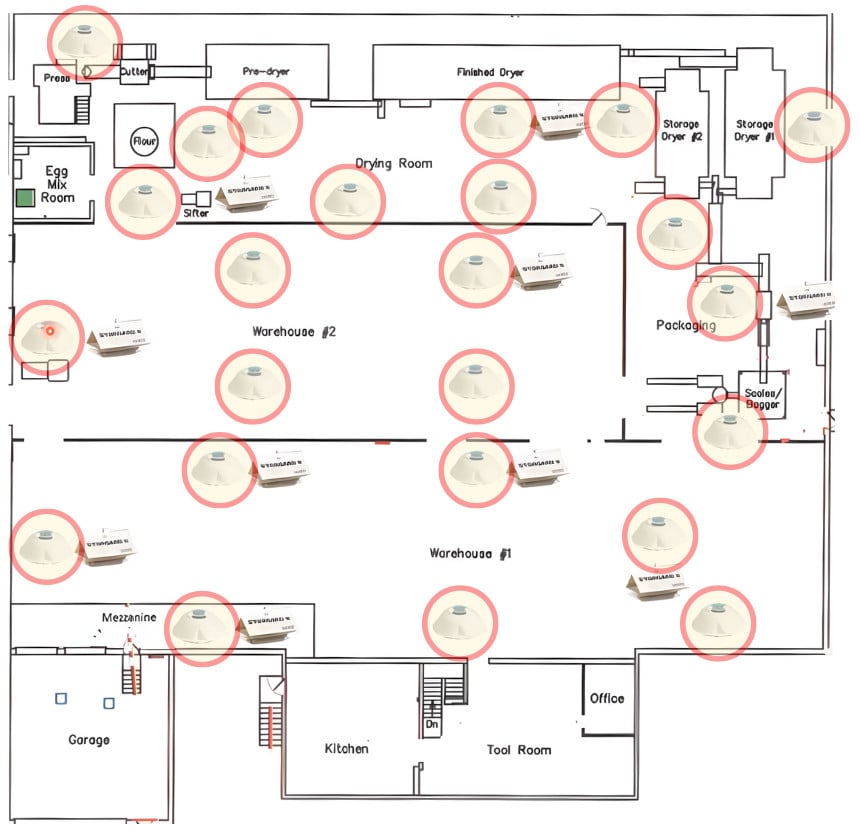
All trap placements should be mapped on a floor plan for consistent servicing. Figure 1 is an example of a pheromone trap placement floor plan for a pasta factory.
4. Retrieve and record data
Frequency of data collection will depend on the situation, but weekly servicing is typical for food facilities. Technicians should count the number of insects in each device, check the trap condition and note hotspot patterns or changes in activity. Monitoring consistently relies on accurate data that forms trends over time so technicians can assess the risks.
5. Service and maintain the system
Traps and lures must be replaced before performance declines. As a general guideline, they should be replaced every 4-8 weeks in mills, processing plants and active warehouses and every 6-8 weeks in clean warehouses or retail spaces.

Heat, humidity, and dust may reduce the life of lures, so will need to be replaced if they are damaged, contaminated or expired (always following manufacturer instructions).
6. Analyse findings and take action
The skill and expertise of the pest manager comes into play in analysing the data. Interpretation of trap data i s to guide decisions such as whether to tighten trap grids, adjust sanitation practices, move or repackage contaminated stock, apply targeted spot treatments, or introduce mating disruption tools such as Cidetrak (for moths) where appropriate. Monitoring should continuously direct technicians towards the root of the problem and support the most effective intervention methods.
In modern stored product IPM, monitoring is not optional. It provides early detection, sustainability benefits and decision‑making guidance for pest managers. In the long term, it results in more satisfied clients and strengthened partnerships.
The Storgard range is available in Australia from Globe Pest Solutions.