Being able to correctly identify and treat the numerous pantry and fabric pests is the difference between a successful treatment and a customer callback.
When investigating a potential fabric pest problem, carpet beetles, clothes moths, silverfish and even psocids (booklice) will be front of mind as potential culprits. However, when damage is found to clothes or other materials, a number of less common fabric pests may in fact be responsible.
Hide beetle and warehouse beetle
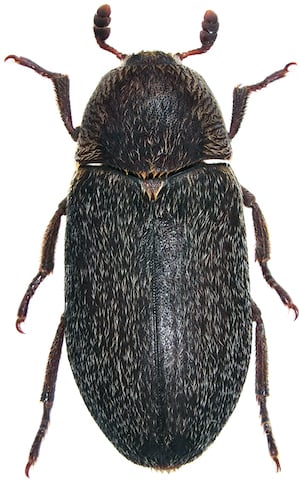
In addition to the carpet beetle, damage to animal fabrics could also be caused by other beetles belonging to the same family (Dermestids): the hide beetle, Dermestes maculatus or the warehouse beetle, Trogoderma variabile.
The hide beetle is particularly attracted to carrion and dried animal materials. In fact, its presence in dead bodies is often used in forensics to estimate the time since death in homicide cases. Hide beetles will stripe a body to the bare skeleton and can cause damage to leather, skins and fur. Although their larvae are similar to carpet beetle larvae with the same irritating hairs, the adult looks quite different – it is an elongated black beetle, up to 10 mm long.
The warehouse beetle has a voracious and wide-ranging diet. Although it does eat animal materials, much like the carpet and hide beetle, it will also eat a wide range of dried plant foods, including cereals, spices, nuts and cocoa. In fact, the warehouse beetle is probably more of a stored product pest than a fabric pest. The adult is a brown, black and white mottled colour, and can be sometimes confused with the Khapra beetle, a serious stored product pest that is not currently found in Australia.
Carpet moth
While clothes moths are the most common moths attacking fabrics (webbing clothes moth, Tineola bisselliella and case-making clothes moth, Tinea pellionella), there is another moth that causes damage: the carpet moth, Trichophaga tapetzella.
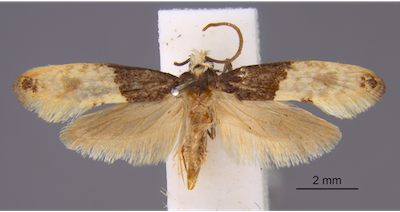
All these moths belong to the same family, the fungus moths, Tineidae. The larvae of all three species target animal materials and are one of the few animals capable of digesting keratin, which is found in fur, feathers and nails. They will also eat a wide range of animal materials including skins, leather and wool. They are more like webbing clothes moths than case-making clothes moths, in that they tend to build silk-lined burrows or galleries throughout the infested material. However, they tend to eat heavier and coarser materials than the clothes moths and can also be found infesting birds’ nests. While the clothes moths fold their wings vertically, carpet moths fold their wings horizontally to form a flattened triangle.
House cricket
Crickets are generally considered an outdoor insect and not necessarily a pest. However, house crickets (main picture, above), which have been spread worldwide through their use as a food for pets and humans, can cause damage to a wide range of fabrics if they find their way indoors. They will chew both animal and plant fabrics, and even synthetic fabrics that may have absorbed animal fluids (e.g. perspiration).
Other pests
It’s important not to forget two common pests that can also cause significant damage to fabrics – cockroaches and rodents. Cockroaches will damage a great number of materials in their hunt for potential food sources, whereas rodents often damage materials through their need to regularly gnaw to keep their teeth short or when collecting nesting material. So when investigating a potential fabric pest problem and assessing damaged materials, it’s good to keep an open mind as to the potential culprit and collect the necessary evidence to correctly identify the pest present and implement the corresponding treatment plan.