Helen Hall, Technical Trainer at Pelsis, shares her tips for how to manage clothes moths.
With spring upon us and the temperatures warming up, now’s the time people start changing their wardrobes – winter clothes are being put away and summer clothes are being brought out of storage. It’s around this time of year pest managers might be taking
calls from customers who’ve found that their favourite clothes have developed small pin-sized holes. They might even have seen moths in the bedroom or found items covered in loose threads – all evidence that clothes pests have quietly been wreaking havoc in dark, unseen areas.
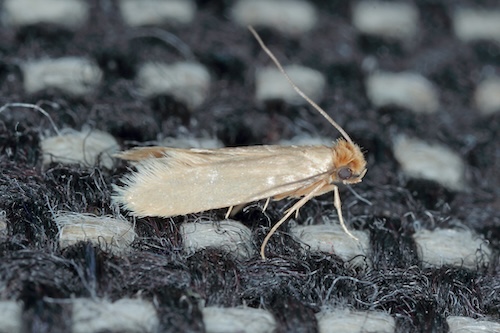
The fabric pests we are referring to here are the common clothes moth (Tineola bisseilliella) and the case-bearing clothes moth (Tinea pellionella). Two species that look quite different, but the larvae of both feed on the same food source: any natural materials containing keratin, such as feathers, hair, fur, wool, dead insects and dried animal remains.

Pest managers know that it’s not just the customer’s favourite jumper that is at risk of being eaten – it’s also carpets, rugs, curtains, and even taxidermy items. The larvae are not selective; they do not differentiate between an expensive cashmere jumper, merino ski socks, a wool mix carpet, a hair piece or a historic artefact. The damage they cause can be extensive (and expensive). They pose a serious threat to textiles not just in residential properties but also to historic collections of artefacts in museums and galleries. Often, the damage isn’t identified until it is too late.
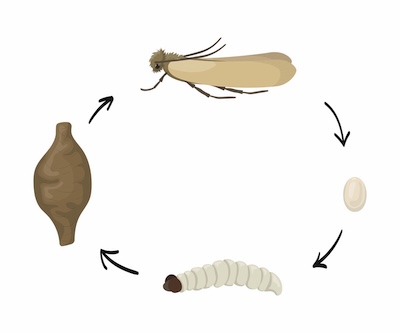
The moths undergo complete metamorphosis consisting of four life stages: egg, larvae, pupae and adult. Both species lay their eggs directly on the material, which will later feed the larvae as they eat in situ. The case-bearing clothes moth larvae feed by moving around the textile in a pouch or envelope of silk that it carries with it, whilst the common clothes moth will create webbing and a feeding tube out of silk to help it move across the textile.
As with all insects, higher temperatures and humidity can make the rate of reproduction in clothes moths quicker. Above 35°C, insects will find it harder to reproduce, but due to our buildings often being temperature controlled, humans provide the perfect environment for the insects to breed in all year round. The common clothes moth is the more prevalent species, likely because it can adapt to lower temperatures to survive and is more tolerant of varying humidity levels. But both species present a substantial pest problem if they are introduced, and will breed quickly.
In the case of these moths, prevention is better than the cure. A number of measures can be taken, such as fitting screens and draft excluders to doors and windows to prevent moths from entering the building. There should be no gaps or damage to the fabric of the building, and care should be taken when bringing in clothes, materials and boxes from outside as they can accidentally enter this way. Storing winter clothing in airtight plastic tubs is a good idea.
Regularly vacuuming carpets and soft furnishings to remove dust and debris will help. With both moths thriving in humid environments, some homes or commercial premises may benefit from having a temperature- and humidity-controlled environment, to minimise conducive conditions.

In areas of high potential damage, monitoring and regular inspections become important. Moth traps are designed to capture adult moths before mating and egg laying can occur. Some are little more than blunder traps whilst others like the Trappit Black Stripe Delta Trap use pheromone lures to attract the moths before they can lay eggs. The black and white vertical stripes of the Trappit Black Stripe Delta Trap were shown to be the most visually attractive combination to moths in research studies. Therefore, there is increased attraction compared to other traps that just use the pheromone.
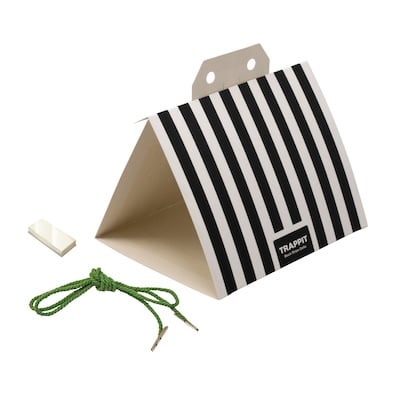
Clothes moths are poor fliers so it is best to avoid hanging the traps and instead placing them low to the ground or areas where the fabrics are being stored. One Trappit Black Stripe Delta Trap offers sufficient coverage in a confined space (such as a wardrobe) for up to 12 weeks. For larger areas, a minimum of one trap per 10 square metres should be used.
Pheromone lures have a relatively short shelf life at room temperature, which is why replacement every 12 weeks is recommended. This also means care needs to be taken to store the replacement lures away from bright lights and below 15°C, as this will ensure they will retain their attractancy for up to 12 months. When refrigerated at 4°C or below, lures can be safely stored for up to 18 months. Stored in the back of warm vehicle or a warm building is not ideal!
If a moth infestation is discovered, the affected area and any associated items should be inspected very carefully for larvae, pupae, bits of webbing, and silk feeding tubes in the weave of the fabric.
The fragility, value or importance of the infested item can inform the appropriate treatment option. In all cases, vacuuming is the first non-chemical measure to take, as this will remove adults, larvae and pupae. The bag should be sealed and disposed of outside to prevent reinfestation. For an infested item of clothing, a hot wash or dry-clean is also beneficial as this will kill the moths without specialist equipment. Make sure to check the label of the garment and follow the instructions listed to ensure the item is not damaged.
Sensitive items can be sealed in a ziplock plastic bag and placed in the freezer, which will kill the larvae in a few days. Keeping the items frozen for up to two weeks will also kill any eggs. If items can tolerate heat treatment, heating them to 49°C for at least 30 minutes will also kill the larvae and eggs. Spraying with an insecticide would be appropriate for large areas such as carpets. While there are other methods such as fumigation and controlled atmosphere treatment, these are usually specialist treatments for larger commercial sites or those with special artefacts that can’t be heat or freeze treated.
Once a moth infestation is successfully managed, advising customers to use monitors will minimise the potential of another outbreak and demonstrate the value of your services.
Helen Hall, Technical Trainer, Pelsis