
Over 15 years of hard work and determination has seen possums eradicated from an area of Dunedin in the South Island of New Zealand.
Over 25,000 possums have been removed from Dunedin’s Otago Peninsula over the last 15 years. These efforts, led by the Otago Peninsula Biodiversity Group together with the local community, has seen possum numbers reduced to the point where total elimination now looks like a certainty.
In 2024, responsibility for eliminating possums on the peninsula was taken over by Predator Free Dunedin. Delivered under the name the Halo Project, conservationists have used AI cameras, trail cameras, and a possum scat detection dog, Scout, to track down any remaining possums within the 9000-hectare area of land.
Predator Free Dunedin project manager, Jonah Kitto-Verhoef, said their detection dog played a key role in helping them identify possum hotspots and areas of little activity along with the use of thermal drones. The project’s success has been found in bringing together technology and community, with local residents playing a vital role by reporting possum sightings and granting permissions to clear predators from their properties.
Predator Free Dunedin project lead Rhys Millar said that while the 9000 hectares of the peninsula was close to being declared possumfree, the wider eradication project area stretched across more than 40,000 hectares including Orokunui Ecosanctuary and in the city – and would be expanding to target more pests going forwards.
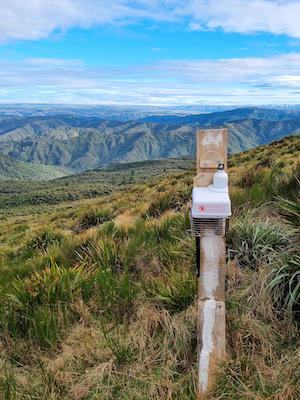
believed to be possum free (photo credit: Predator Free Dunedin)
“We’re now at a point where we feel confident that we can eliminate possums and we’re beginning to explore multi-species elimination operations, which will encapsulate rats, and the suite of mustelids as well as possums,” said Mr Millar.
“We’re going to likely include feral cats and also rabbits in the mix. Not that rabbits are a target species for Predator Free 2050, [but] we believe by removing rabbits it will make the control of mustelids a lot easier.”
Although with funding only guaranteed until 2027, Mr Millar said they may need to simply maintain their wins rather than expand elimination efforts further as it was vital not to lose those hard-won gains.
The removal of possums from the peninsula appears to have had a profound effect on the local environment. Mr Kitto-Verhoef said there had been numerous benefits for local residents who have reported noticing more bird life and a greater diversity of plants, which would usually be ravaged by possums.
“We’ve got people in residential areas who are winning flower competitions with their magnolias for the first time because they’ve [previously] been browsed so heavily by possums,” he said.
“People enjoy crops of broad beans and their roses so I guess our view of success is often in a conservation lens but for some people success is being able to grow a healthy rose bush.”
Main image: Predator Free Dunedin project manager, Jonah Kitto-Verhoef, with detection dog Scout (photo credit: Predator Free Dunedin)