
Funnel ants (Aphaenogaster spp.) in Australia
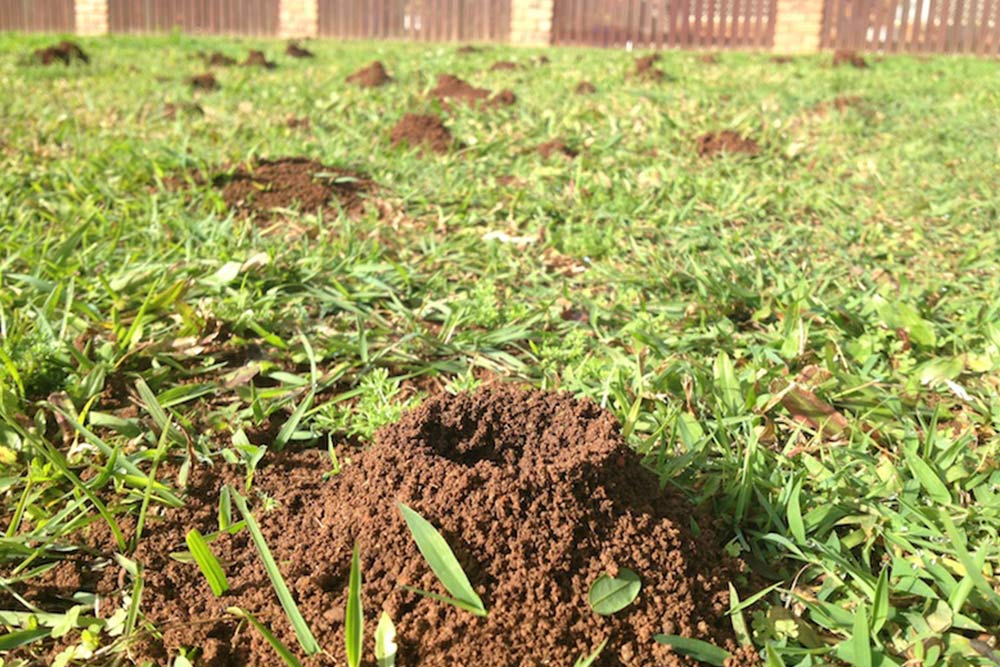
Pest Snapshot - Funnel Ant
- Scientific name: Aphaenogaster spp.
- Identification: Large shiny mid brown ant Size: 5.0 – 8.0 mm. Builds funnels on lawns
- Health threat: Low – Moderate (injury through falling on uneven lawns)
- Bite / sting pain: Painful sting but lives underground and not particularly aggressive.
- Difficulty to control: Moderate
- Diet: Honeydew from root aphids and protein from invertebrates
- Nest locations: Under lawns and grassy areas
- Colony structure: Multi-nest colonies, queen numbers unknown
- Main pest season: Spring – Autumn, more active after rain
- Indoor/Outdoor pest: Outdoors
There are eight funnel ant species in Australia, often with unique species in the different geographies. Other that the fact these species build their nests underground and create obvious funnels above ground with their excavations, remarkably little is known about funnel ants.
Invasive / native:
Native
Distribution:
Funnel ants are widely distributed across eastern and southern Australia (except Tasmania), into southern areas of Western Australia, with other species in the Northern Territory and northern Western Australia. Aphaenogaster longiceps and Aphaenogaster pythia are the most common and widespread species.
Typical nest location:
The various funnel ant species build nests in a variety of wooded habitats, from rain forests to dry open forests along the coastal fringe. The common species, A. longiceps and A. pythia, build nests in lawn and grassed areas whether their represent a significant pest problem.
Not only do funnel ant nests affect the appearance of lawn / grassed areas, but their extensive excavation can undermine the soil structure. This in turn can create uneven ground which can cause injury and damage mowing equipment. In the domestic situation this can affect the property value and on sporting fields it can affect playability.
Colony size / structure:
It is clear that funnel ants can create multiple nests in a given area. However, it is not known whether these are multiple-nests that part of the same colony or individual nests – the number of queens present is known. However, under favourable conditions the number of funnels created by their nest excavations can exceed 20 or more per square metre.
Identification:
Colour: Shiny brown ant with obvious hair covering head and body
Size: 5.0 – 8.0 mm (workers are of variable size)
Nodes on petiole: 2
Food preferences:
Little is known about their foraging behaviour and feeding habits. They are known to tend aphids that feed on the root of plants, presumable to access honeydew. Arthropod fragments are often found in their nests, indicating their source of protein, but it is unclear as to whether they actively forage for live or dead arthropods or whether they are opportunist foragers, feeding on arthropods that fall into their funnels.
Distinguishing features / behaviours:
- Their obvious funnels are the key identification feature, typically becoming more abundant and obvious after rain as their repair/excavate their nest chambers
- Funnel ants are rarely seen far from the funnels and then, typically they are seen at dusk/night or when repairable their nests/funnels after rain
Bite / sting:
Funnel ants will sting but are not particularly aggressive, although they will emerge from their nest in small numbers to defend against intruders
Prevention tips:
There is very little that can be done to prevent a funnel ant problem other than to carry out a funnel ant treatment. The type of grass / soil type may make certain lawns more susceptible to infestation – sometimes one house has a bad infestation, whilst the neighbour does not. However, to date there has been no mapping of likelihood of infestation with the various grass and soil types.
Other comments:
When treating large areas of turf, particular attention needs to be made to safety and environmental considerations and application methods to ensure safe and accurate application
Go to the main ant page for other ant species.
How to get rid of funnel ants - Treatment Notes:
Although bifenthrin products from the hardware store are labelled for funnel ant control, they generally don’t provide lasting control. Professional pest managers use specialist ant products containing fipronil (available as a spray or granule), which are not available to the public.
There is no need to inject the nest, applying the spray or granule to the funnel mounds proves very effective. As the ants excavate the soil they pick up the insecticide. It is likely that there is also some transfer of insecticide to nest mates. Nest elimination can be expected within a week or so. However, it is important that all funnels are treated to ensure complete control. In addition, with the treatment long lasting in the soil, it can prevent re-infestation for 12 months or more.
Some granular baits may have funnel ants on the label, but as their foraging patterns are somewhat unpredictable, the performance of baits can be very variable.
Black house ant FAQ
How to get rid of funnel ants naturally?
There is no natural funnel ant treatment. To get rid of funnel ants and exclude them from an area requires an insecticide treatment.
However, they don’t really like certain types of soil and certain types of grass. You can’t do much about the type of soil on your property, but if you were going to lay a new lawn, check out the types of grass in your neighbourhood that appear to be funnel ant free.
What do funnel ants eat?
Funnel ants feed on the honeydew excreted by aphids that feed on the roots of the grass. They also feed on invertebrates that fall into their funnels.
Why do funnel ant mounds appear after rain?
Funnel ants excavate soil to build their underground tunnels and nest chambers after train when the soil is softer. They build the funnels as they move their diggings to the surface. The funnels provide their access to the surface and potential traps for any unsuspecting invertebrates that may crawl into the funnels.
What damage can funnel ants do?
Apart from being unsightly, the soil can damage mowing equipment.
If the infestation becomes extensive, the soil starts to subside and the uneven surface can cause injury to users and damage to equipment.
Unsightly funnels and uneven lawn and negatively impact the house price.