Regional Manager for FMC (NSW & ACR) Lindsay McCrae discusses two nuisance ant species, giving tips for gaining control.
The term ‘nuisance ants’ refers to ants that are typically challenging to control, whether invasive or native species. Here we look at two of the main nuisance ants, providing an overview of their appearance, status, nesting and feeding habits, and control options.
Argentine ant (Linepithema humile)
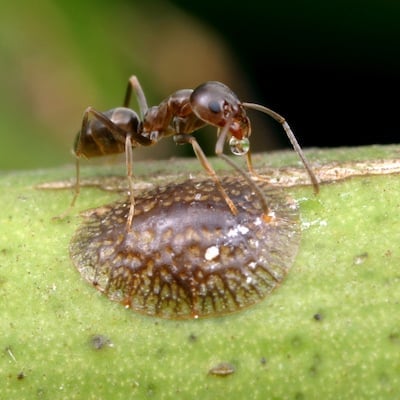
The Argentine ant is one of the most invasive ant species in the world, first introduced into Australia in 1939. The Argentine ant is aggressive and territorial and will exclude, outcompete and attack local ant species. Lizards, bird eggs and newly hatched chicks are all targets for attack.
The Argentine ant is small in size at around 2-3 mm. It has a uniform brown colour and a smooth shiny body without hairs. While they have no sting, they do bite humans when disturbed.
These ants are often found nesting outdoors in exposed soil, retaining walls, cracks in concrete, fence posts or under logs. However, they often move indoors and can form supercolonies. Each nest contains multiple queens and new colonies are easily formed by budding i.e. where a queen will take some workers and set up a new nest nearby. A single Argentine ant colony may comprise many nests spread across a large area, making control efforts difficult.
Although they prefer sweet foods, they will eat almost anything (including meat, oils, other insects, seeds and fruits). They switch to protein-rich foods when the queens are egg laying and larvae are developing.
Black house ant (Ochetellus glaber)
Native to Australia, the black house ant (main picture, above) is one of the few ant species that will nest indoors, invading buildings and infesting electrical items.
The black house ant is small in size at 2-2.5 mm long and is shiny black or dark brown, with single-sized workers, and no bite or sting.
These ants can nest on the ground under objects, in trees and sometimes in houses. They usually enter buildings via an infested tree touching the house and can spread by budding off.
While they prefer sweet foods such as honeydew and nectar, they will also eat other insects and seeds.
Suggested treatment plan
The treatment for both of these invasive ants requires a coordinated, multi-pronged approach. Firstly, foraging trails should be baited. Secondly, any identified nests should be treated by direct nest application with liquid and/or granules. Thirdly, to prevent ingress, a liquid insecticide should be applied to the building perimeter. Internal crack and crevice harbourages should then be treated with aerosol/dust and bait. Lastly, hygiene and exclusion measures must be taken and the customer educated on the importance of continuing these practices.
All products in the FMC general pest range carry an ant registration. Notably, Biflex Mikron and Astro also have HACCP approval and along with Biflex Ultra, Biflex Aqua and Fury are registered for internal use. Externally, Brigade Granular is a popular option around perimeters, paved and lawn areas while Dragnet Dust offers an excellent option for roof voids and wall cavities.
It is important in every situation that an IPM (integrated pest management) program is adopted, within which an FMC product(s) can always be incorporated.