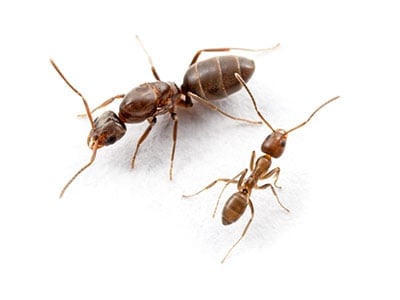
Spring is the time to take preventative action against ants, preventing potential summer infestations.
Ant activity starts to pick up in spring. While they may not be a problem for your customers yet, eliminating colonies at this time of year will prevent major issues in the summer and autumn. Of course, if the ants aren’t particularly active or numerous, it can be difficult to find the nest, which is where ant baiting comes to the fore. Here are some key tips for ant baiting in spring.
Firstly, it’s important to understand a bit about colony dynamics and the dietary needs of the different castes in the colony. For most ant species, winter is a ‘dormant’ period – egg laying has slowed or stopped and foraging has reduced, picking up a bit on warmer days. As the days lengthen and the weather warms up as we move into spring, foraging activity increases and egg production picks up. Foraging ants have different dietary requirements to the colony. Foraging ants (of all species) rely on sugar for energy; they are not growing so need limited amounts of protein. The black house ant pictured above is just one example.
The colony, however, needs large amounts of protein, to support the egg laying of the queen(s) and the development of larvae into workers and reproductives. This means the foragers will often be attracted to sources of sugar (for themselves) but also forage for protein sources (for the colony). The result is that the colony diet and food preferences in spring can be quite varied. This therefore presents challenges when choosing a suitable bait for control programs.
Argentine ants are perhaps the classic example of ants with a varied springtime diet. These ants are well known for tending aphids and scale insects for their honeydew. However, they do have a multi-queen colony structure, with as many as eight queens for every 1000 workers. This means the colony has a massive reproductive output requiring a significant amount of protein. A product like Synergy Pro from Sumitomo is specifically designed to target ants with a varied diet. It contains an oil-based granule and a protein-based granule, both of which also contain a carbohydrate component. It therefore provides a colony with all their dietary requirements during this growth period in spring.
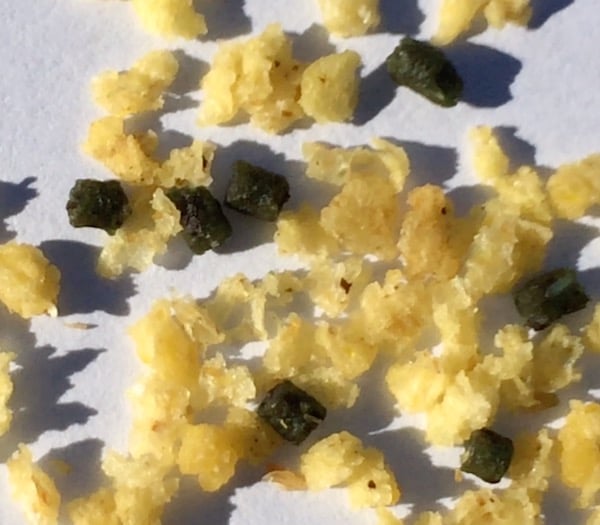
Synergy Pro also contains a dual active system, hydramethylnon as the killing agent and pyriproxyfen as an insect growth regulator. The inclusion of an insect growth regulator can be particularly effective in spring. Given food is preferentially provided to the queens and larvae, even if they receive a small amount of bait, the insect growth regulator – which is effective at incredibly low doses – can have a profound effect. It both prevents queens from laying viable eggs and stops larvae from developing.
Granular baits are also a preferred format when foraging levels may be low and nests cannot be located, which is often the case in spring. By sprinkling the bait over the area to be protected, it ensures ants will come into contact with the bait even with a low density of foragers. But no matter the time of year, granular baits are the preferred format for invasive ants, such as Argentine ants, coastal brown ants and fire ants. All these species nest outdoors and develop super colonies, so can reach massive infestation levels in summer. Granular baits are a great option to treat large areas quickly.
A word on fire ants: fire ant activity is very much driven by soil temperature. During winter, fire ants can still be active in the warmer coastal areas, but activity can drop off significantly in the inland areas that see colder nights. However, in spring, fire ant activity rapidly increases everywhere with the quickly rising day temperatures, which increases the soil temperature. Although the nests enter a growth phase with increased egg production in spring, many nests may still be small with no visible mound. This makes broadcast (area) baiting a good option, eliminating nests before they become a problem and preventing the production of reproductives.
So, consider preventative ant baiting in spring, as part of ant control program or as an add-on service to general pest treatments. Granular ant baits allow for nest elimination over a large area when foraging numbers are low and a bait such as Synergy Pro with its dual granule formulation is an ideal choice to deal with the varied ant diets.